

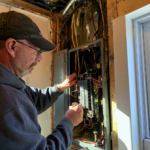

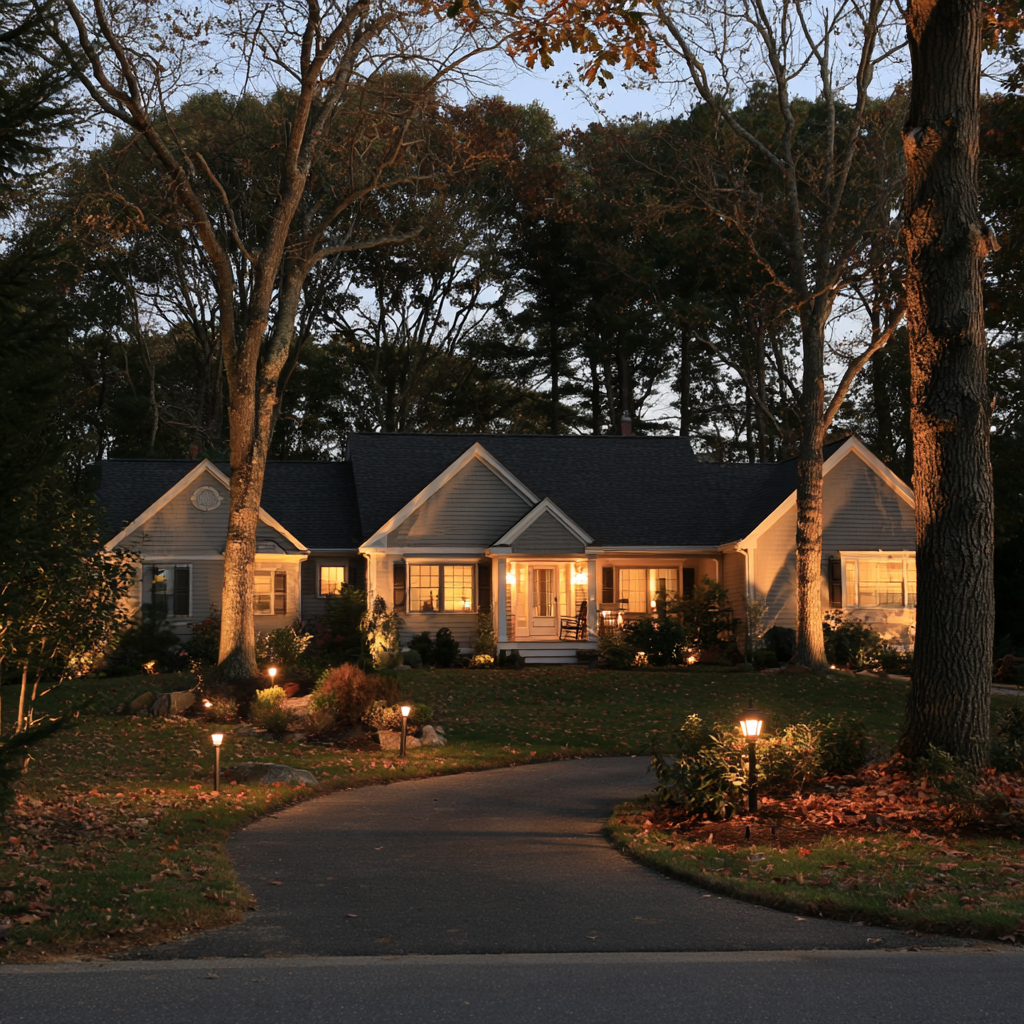
For most New England yards, you’ll want 12V low-voltage landscape lighting for its safer operation, flexible fixture placement, and easier seasonal service. A transformer reduces household current to 12V, while direct-burial cable adapts as beds, stonework, and plantings change. Use 120V line voltage when you need exceptional flood output, permanent security lighting, or commercial-scale coverage. Proper transformer sizing, wire gauge, GFCI protection, and weatherproof connections help your lighting perform through freeze-thaw cycles and snow.
Low Voltage vs. Line Voltage: Quick Answer
For most New England homes, low-voltage 12V landscape lighting is the better choice: an outdoor transformer reduces 120V household power to a safer working voltage, while flexible cable and serviceable fixtures simplify pathway, planting-bed, and architectural lighting layouts. In a low voltage vs. line voltage decision, choose a 12V AC voltage landscape lighting system for adaptable, LED-forward residential outdoor lighting. Plug the transformer into a GFCI-protected exterior outlet, size it with 20–25% capacity headroom, and specify the right landscape wire gauge to control voltage drop across longer runs. You can shallow-bury cable and refine fixture positions as your garden evolves. Reserve line voltage lighting for commercial-scale security or exceptional flood-output needs. Its 120V wiring demands conduit, protected connections, code compliance, and typically a licensed electrician—especially in wet, freeze-thaw New England soils.
How Low-Voltage and Line-Voltage Systems Work
With low-voltage lighting, you plug a transformer into a GFCI-protected exterior outlet and distribute 12V power through landscape wire to your fixtures. In New England yards, you’ll need to size wire and transformer capacity carefully to prevent voltage drop on long runs. Line-voltage systems deliver 120V directly, typically requiring conduit, junction boxes, code-compliant installation, and often a licensed electrician.
Low-Voltage System Operation
Low-voltage landscape lighting starts at a GFCI-protected exterior receptacle, where a transformer converts household 120V power to 12V AC before sending it through buried landscape cable to each fixture. Your low voltage system uses this transformer to step down Voltage, creating a flexible power supply for a low-voltage landscape plan that can evolve with your New England garden.
Specify landscape wire and wire size carefully to control voltage drop, especially across long runs to stone walls, specimen trees, or driveway entries. Use lower-gauge 10–12 AWG cable when distances or loads increase, so fixture output stays consistent through wet springs and cold winters. Size the transformer at roughly 125% of connected wattage, keeping loads near 80% capacity. Because 12V AC greatly reduces electrical shock exposure, you can service and refine lighting layouts with greater confidence.
Line-Voltage System Requirements
Line-voltage landscape lighting takes a more permanent, infrastructure-driven approach, carrying 120V directly from your home’s electrical system to each fixture. You’ll typically route wiring 18–24 inches deep through conduit and junction boxes, creating a durable installation for New England’s freeze-thaw cycles and formal hardscape layouts. A licensed electrician should design and install the system to satisfy the National Electrical Code and local electrical codes, including weather-rated connections and circuit protection.
Unlike low-voltage layouts powered from the transformer, line voltage landscape lighting doesn’t rely on transformer sizing or total wattage calculations. Still, you may use a GFCI-protected outlet for controls or accessory equipment. This direct-power architecture supports high-output fixtures and clean, integrated lighting zones, but it requires deliberate planning before patios, stone walls, and planting beds are finished.
Safety and Installation in New England Conditions
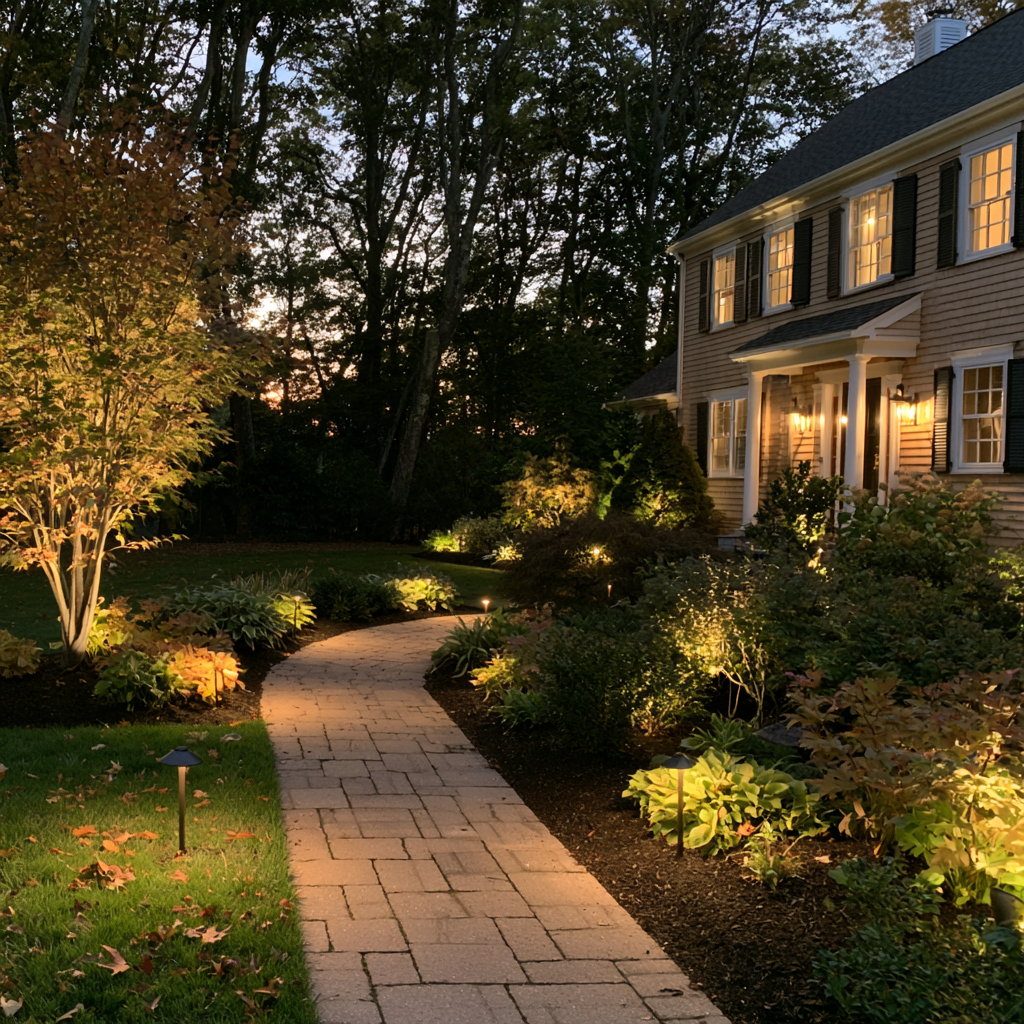
In New England, you’ll design for wet soil, freeze/thaw movement, and snow-season access from the start. Use a GFCI-protected exterior outlet, direct-burial cable, and weatherproof connectors for 12V systems, while 120V installations require code-compliant dedicated circuits and licensed electrical work. Proper burial depth, protected routing, and transformer placement help your lighting remain safe, balanced, and reliable through winter.
Winter-Ready Installation Practices
Because New England’s rain, snowmelt, and freeze/thaw cycles punish outdoor connections, start with a 12V low-voltage system powered by a transformer plugged into a GFCI-protected exterior outlet. Optimize transformer placement near the outlet, at least 12 inches above grade, and route low voltage landscape lighting through protected planting beds.
For a winter-ready installation, bury direct-burial cable about six inches deep, then test every zone before mulch conceals it. Specify 12- or 10-gauge wire for long wire runs to control voltage drop and keep total load below 80 percent of transformer capacity. Use outdoor-rated, silicone-filled waterproof connectors, sealed splices, and shrink tubing to preserve low voltage outdoor lighting through saturation and ice. This 12V outdoor lighting strategy creates a resilient, flexible nighttime design that survives seasonal ground movement without sacrificing fixture performance.
Electrical Safety Requirements
A winter-ready layout still depends on choosing the right electrical safety framework for New England’s wet, freeze-prone conditions. Your electrical safety requirements should distinguish low voltage systems from voltage and line voltage installations. A 12V AC transformer connected to a GFCI-protected outlet reduces shock exposure and supports a fault-safe landscape lighting installation, even if seasonal edging nicks a cable. Mount the transformer at least 12 inches above grade, near its power source, and test every zone before burial. For direct-burial runs, use listed connectors and shallow, roughly six-inch trenches to protect the design with minimal site disruption. Because moisture outdoor electrical failure is a primary risk, 120V work demands a licensed electrician, National Electrical Code (NEC) compliance, wet location code materials, and proper conduit/junction boxes for every exposed connection.
GFCI Outlets And Weatherproofing
Although New England’s rain, snowmelt, and freeze-thaw cycles challenge every outdoor connection, you can protect a 12V landscape lighting system by plugging its transformer into a GFCI-protected exterior outlet and mounting it at least 12 inches above grade. This approach strengthens ground fault protection and keeps low voltage lighting reliable.
- Select GFCI outlets with in-use covers for wet-location safety.
- Use direct-burial rated cable, sized with the correct wire gauge.
- Bury 12V AC runs about six inches deep beside planting beds.
- Seal every splice with outdoor silicone-filled connectors.
- Position the transformer away from drip lines and snow piles.
Thoughtful weatherproofing preserves crisp beam control across stone paths and evergreen borders. By contrast, 120V fixtures demand code-compliant wiring and GFCI protection; a failed connection presents a far greater shock hazard.
Transformer Size, Wire Runs, and Voltage Drop
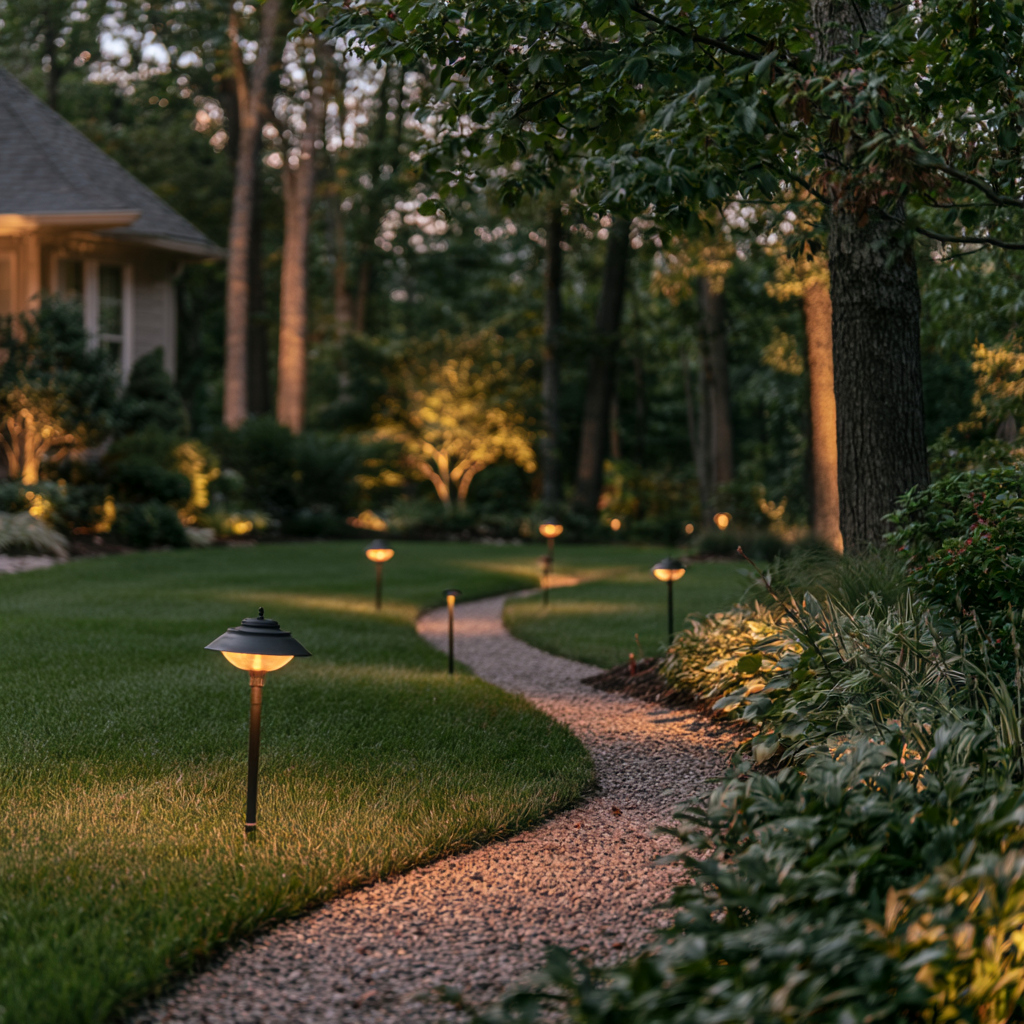
For low-voltage landscape lighting, start by sizing the transformer to the combined wattage of every fixture, then add roughly 20–25% capacity so the system operates at about 80% or less of its rating. Add up the wattage before selecting transformer size for your 12V landscape lighting layout.
Your wire runs shape performance across a New England property. As cable length increases, voltage drop can dim distant fixtures and shift LED color consistency. Match the AWG wire gauge to each route: 12-gauge cable suits loads of 100W or less for roughly 100 feet, while thicker wire, such as 10 AWG, protects output over longer runs. For large gardens, stone walls, or perimeter plantings, split low voltage fixtures into zones with separate runs. Install direct-burial cable in a six-inch trench and leave 18 inches of slack at each fixture for service.
When Line Voltage Makes Sense
Line voltage becomes the better fit when a New England project demands sustained, high-output illumination beyond a low-voltage system’s practical transformer and wire-run limits. You’ll gain direct 120V power for fixed, performance-driven installations where voltage drop and transformer capacity shouldn’t constrain the design.
- High-output floodlights washing a barn façade, sports court, or long driveway
- Security lighting protecting entrances, equipment yards, and detached structures
- Commercial properties requiring reliable illumination across expansive site zones
- Large commercial landscapes or parking-lot-scale layouts with permanent fixture locations
- Conduit and junction boxes installed to local code requirements by a licensed electrician
Because line voltage wiring typically buries deeper—often 18–24 inches in conduit, jurisdiction depending—it suits durable, snow-ready infrastructure. You can specify ambitious lighting layers without transformer derating, provided professional installation supports the permanent plan.
Choose Low Voltage or Line Voltage
How do you choose between low voltage and line voltage in a New England landscape? Select low voltage, 12V lighting, for flexible, design-forward residential illumination. A transformer steps household 120V down to a safer level, letting you adapt fixture locations as beds, stonework, and plantings evolve. Size transformer wattage capacity with an 80% loading target, and specify 12-gauge or 10-gauge cable to control voltage drop on long runs. A shallow, roughly 6-inch trench simplifies landscape lighting installation.
Choose line voltage, 120V, for high-output security zones, tall trees, or permanent architectural lighting where performance outweighs flexibility. You’ll need a licensed electrician, code-compliant conduit, junction boxes, and typically 18–24-inch trenching. Because 120V connections present greater shock risk, line voltage suits durable, professionally engineered systems. Match wire gauge, output, and installation depth to your site’s winter conditions.
Frequently Asked Questions
What Voltage Is Best for Landscape Lighting?
You’ll usually get the best landscape lighting results with 12V low voltage. It supports low voltage safety, flexible recommended fixture spacing, bulb brightness levels, dimming options, and smart control features. Use weatherproof housing, follow installation depth guidelines, and apply voltage drop basics with heavier wire on long runs. Size and locate equipment using transformer placement tips, then compare energy cost estimates. Choose 120V only when you need specialized, professionally installed high-output lighting.
What Is the Best Outdoor Lighting System for My Yard?
You’ll get the best results from a layered, low-voltage LED system tailored to New England weather and your property’s circulation. Use LED integration ideas and zoning placement tips for paths, entries, trees, and patios. Prioritize weatherproof fixture ratings, smart lighting hubs, motion sensor options, timer control benefits, and dimming compatibility. Account for transformer placement factors during installation planning steps, then protect performance through seasonal maintenance routines.
Can Low Voltage Landscape Lighting Cause a Fire?
Yes, low-voltage landscape lighting can cause a fire, but you’ll minimize thermal risk through smart design. In New England’s rain, snow, and freeze-thaw cycles, use weatherproof wiring, outdoor rated fixtures, and high insulation quality. Prioritize low voltage safety with GFCI protection, proper grounding, and code compliance. Keep transformer placement dry, ventilated, and below 80% capacity. These fire prevention details let your lighting glow reliably without compromising safety.
What Size Wire Is Best to Run for Outside Landscape Lights Low Voltage?
Use 12-gauge direct-burial cable for most low-voltage landscape systems; choose 10-gauge when wire length increases or voltage drop threatens far fixtures. Your circuit sizing should keep transformer loading below 80%. Plan transformer placement centrally, optimize cable routing, and add conduit protection near hardscape crossings. Bury cable six inches deep, use weatherproof connectors for buried splicing, and follow installation tips suited to New England’s freeze-thaw conditions. Avoid undersized 14- or 16-gauge runs.
Conclusion
For most New England yards, low-voltage lighting gives you safer installation, flexible design, and efficient control through snow, rain, and freeze-thaw seasons. You can layer warm path lights, uplight stone walls, and wash evergreen canopies without overwhelming your landscape. Choose line voltage when you need high-output fixtures, long runs, or commercial-grade performance. Size your transformer, plan wire routes, and account for voltage drop so every fixture glows evenly from the driveway to the back garden.


