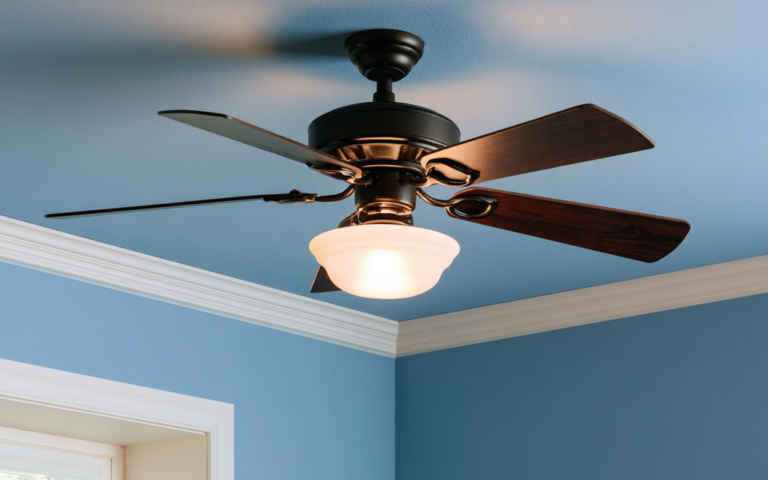

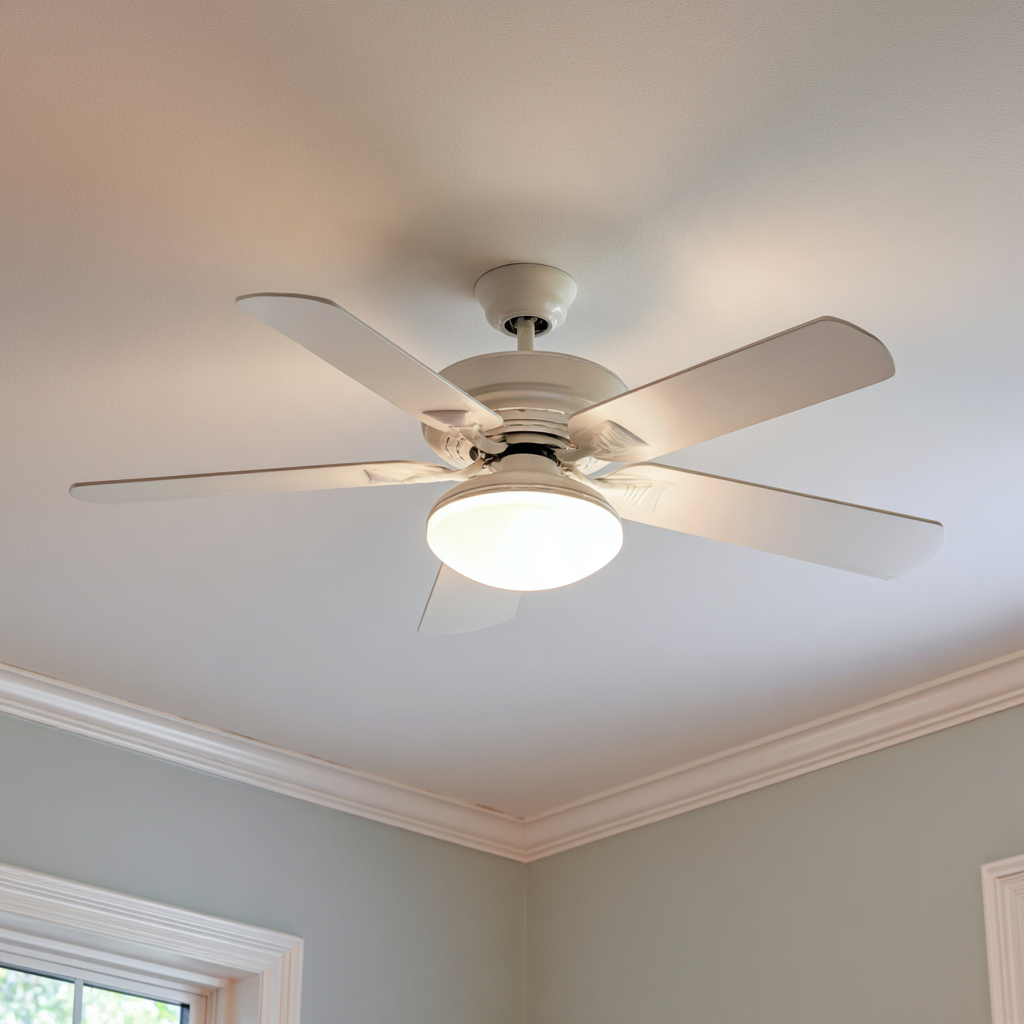
A fan-rated junction box replacement helps stop wobble and noise by giving your ceiling fan a rigid, vibration-resistant mount. You’re replacing a box that can flex, loosen screws, and amplify motor torque with one built for fan weight and constant rotation. When the box is anchored to the joist and rated for dynamic load, the fan stays aligned, hum drops, and wear slows. You’ll also see which mount style fits your ceiling best.
Why Ceiling Fans Wobble and Hum
If your ceiling fan wobbles or hums, the cause is often mechanical rather than electrical: a loose mounting connection, a box that wasn’t built for fan vibration, loose screws, bent or unbalanced blades, or motor wear can all create movement and noise. You should inspect the mounting hardware first, because a weak attachment to the joist lets torque amplify every spin cycle. Check blade screws and alignment; even small imbalances can turn into vibration, then hum, then accelerated wear. If the electrical box wasn’t reinforced for dynamic load, it can flex and transfer motion into the ceiling. You’ll get better performance when you correct the root cause early, before loosened fasteners and stressed bearings compound the problem.
What a Fan-Rated Box Does
A fan-rated box gives you the load and vibration support a ceiling fan needs by handling both its static weight and the torque from the motor. It also gives you stronger joist anchoring through support arms or similar hardware, so the mount stays rigid instead of loosening over time. With that added structure, you get safer fan mounting and a lower risk of wobble, squeaks, or humming.
Load And Vibration Support
Though a ceiling fan may seem light, the motor adds constant vibration and torque that a standard box isn’t built to handle. You need a fan-rated box with heavier-gauge metal or reinforced plastic to carry the static load and the spinning load together. That structure helps keep fan blades aligned, cuts shake, and limits wear at the mounting point. Because the box resists vibration-driven stress, you reduce loosening, sagging, and the small movements that turn into noise over time. Many designs also spread force more evenly into the ceiling assembly, so the installation stays stable under repeated cycling. If you want a do it once—do it right upgrade, this support is the difference between dependable operation and a mount that slowly degrades.
Joist Anchoring Strength
A fan-rated junction box doesn’t just hold the fixture; it anchors the fan assembly directly to the ceiling joist, often with expandable support arms or dedicated mounting hardware. You get a connection that handles both the fan’s weight and the torque from constant rotation. In expert ceiling fan installation, that direct joist anchoring matters because standard boxes can’t manage dynamic loads without loosening. The heavier-gauge metal or reinforced body keeps the mount rigid, so vibration doesn’t translate into wobble, humming, or screw creep. By transferring force into the joist instead of drywall, you also avoid sagging and cracking at the mounting point. For modern upgrades, this is a do-it-once, do-it-right solution that keeps the support stable long term.
Safer Fan Mounting
With a fan-rated junction box, you’re using a mount built specifically for ceiling fans, not just light fixtures. It uses heavier-gauge metal or reinforced plastic plus reinforced fastening so your Fan’s static load and spinning torque stay controlled. That design resists vibration-driven stress, so screws don’t loosen as quickly and the assembly won’t drift into wobble or noise. When you choose a fan-rated remodeling box, expandable support arms anchor into the joists and spread the load more evenly. You keep the bracket rigid against the framing, which helps the Fan stay aligned, prevents sag, and reduces long-term shifting. For modern installations, that’s the smart, engineered choice: safer support, longer service life, and do-it-once confidence.
Why Standard Boxes Fail
Standard light-rated boxes aren’t built for a ceiling fan’s constant vibration, torque, and dynamic movement, so fasteners can loosen over time. Without rigid fan-rated support tied to a joist, the mounting connection can wobble, hum, and eventually sag. As loads cycle during operation, the box can crack surrounding drywall or plaster and fail outright.
Vibration Wears Loose Boxes
Ceiling fans create constant vibration and torque, which can loosen a light-duty junction box over time if it wasn’t built for fan loads. When you’re choosing a ceiling fan, match it with a fan-rated box so the assembly stays rigid and quiet. Standard boxes can let mounting screws back out, which starts wobble, adds noise, and throws blade alignment off. That flex at the ceiling plane also increases motor stress and accelerates wear.
- Vibration drives screw loosening
- Torque reduces joint rigidity
- Flex causes blade misalignment
- Motor load rises under shake
- Fan-rated boxes resist dynamic stress
Light Boxes Lack Support
A light-rated junction box isn’t built for a ceiling fan’s constant torque and vibration, so the mounting connection can loosen over time. When you install Ceiling Fans on a standard light box, you’re relying on hardware meant for static fixtures, not rotating motor loads. That mismatch limits support, and the box can’t transfer forces cleanly into the framing. As the fan runs, the mounting points can shift slightly, which leads to sagging, wobble, and audible creaking or humming. You need a fan-rated remodeling box with heavier-gauge metal or reinforced non-metallic construction plus structural anchoring. It gives you the load path and rigidity Ceiling Fans require, keeping the assembly stable and reducing long-term mechanical movement.
Dynamic Loads Cause Failure
Once the fan starts spinning, the box faces constant vibration and torque, not just the fan’s dead weight, and that motion is where standard light-rated boxes start to fail. You’re no longer dealing with a static load; you’re managing dynamic forces that work screws loose, shift alignment, and amplify noise. When the box doesn’t lock into the ceiling joist, repeated motion can pull the assembly down, creating wobble and sag.
- Loose screws reduce stability
- Vibration creates humming
- Misalignment disrupts effective airflow
- Torque stresses box walls
- Joist anchoring resists failure
Fan-rated remodeling boxes use reinforced metal or plastic and secure anchoring to withstand this motion, so you get a safer mount, quieter operation, and longer-term reliability.
How Fan-Rated Boxes Anchor to Joists
Fan-rated junction boxes anchor directly to ceiling joists through mounting arms, brackets, or other joist-attachment hardware, giving the fan a solid structural connection that can handle constant vibration and operating torque. You’re not relying on the ceiling finish; you’re locking the load into framing, which keeps the assembly stable over time. Heavier-gauge metal or reinforced non-metallic housings resist cracking and deformation, so the box stays square under motion. Expandable supports and direct-attach designs spread force across the joist for a tighter hold. When you install the correct fan-rated box, you reduce loosening at the screws and prevent sagging that can trigger wobble and noise. For added convenience, Contact Us, and we’ll help you choose the right ceiling solution. Terms of Service. Rights Reserved.
Signs You Need a Fan Box Replacement
How do you know it’s time to replace the fan box? Watch for vibration drift, mounting noise, and ceiling stress. A standard light fixture box can’t manage fan torque, so loosened hardware and imbalance can build fast. You’ll notice:
- Wobble or shaking that increases over time
- New humming after install or blade tuning
- Cracked drywall or plaster at the canopy
- A box that feels loose, or a fan that sags
- Confirmation that the box isn’t fan-rated
When you see these signs, replace the box with a fan-rated remodeling model that anchors to the joists. That upgrade restores structural integrity, limits dynamic movement, and helps stop recurring noise before it spreads through the ceiling.
Which Arlington Fan Box Fits Your Ceiling
To pick the right Arlington fan box, match the box style to your ceiling structure, drywall thickness, and fan load. For 1/2 or 5/8 drywall, non-metallic joist mounts like FB405/FB407 give you an economical, direct-to-joist option; choose double-joist or wood I-beam variants when needed. If you want maximum rigidity, steel joist-mounted FBS405/FBS407 fasten to the joist and better resist fan torque and vibration. For under-joist installs, FB415/FB426 use gripping tangs and a center screw, while FBS415/FBS420 offer 1-1/2″ or 2″ depths. When retrofit access or extra volume matters, FB444 and steel side-mount styles such as FBS415S/FBS420 improve Ceiling Compatibility without forcing a ceiling redesign.
How Box Material Affects Fan Stability
The box material plays a big role in fan stability because a ceiling fan doesn’t just hang from the box—it also pushes it with constant vibration and torque. When you choose a fan-rated junction box, its material rating tells you how well it resists that stress. Steel models fastened to a joist give you a rigid anchor, while reinforced non-metallic boxes keep 1/2 or 5/8 drywall installs stable.
- Heavier-gauge steel limits flex.
- Reinforced polymers absorb vibration.
- Proper ratings prevent screw loosening.
- Stable mounts reduce wobble.
- Less movement means fewer hums and rattles.
If the box isn’t engineered for fan loads, oscillation can open gaps and weaken the mount. A correctly rated box helps you keep your fan quiet, aligned, and durable.
What to Check Before Installation
Before you install the replacement, confirm you’ve got a fan-rated remodeling junction or fixture box, not a standard light fixture box, since ceiling fans create constant vibration and torque that can loosen a marginal mount over time. Inspect Ceiling Wiring, box depth, and the framing interface before you cut power. You need a mounting method that matches your ceiling structure, whether you’re using direct joist screws, double joists, or approved bracket hardware. Check for loose screws, cracked plaster or drywall, and any gap between the box and ceiling; those signs often predict wobble and humming. Verify the box supports your ceiling thickness, such as 1/2-inch or 5/8-inch material. Finally, make sure the fan’s connection locks tightly into the joist so blade and motor forces stay contained.
Frequently Asked Questions
Can a Ceiling Fan Be Rebalanced?
Yes, you can rebalance a ceiling fan to restore Ceiling Harmony. You’ll first tighten every blade, bracket, and mounting screw, then use a balance kit to add small weights until vibration drops. If wobble continues, inspect for a bent blade or a weak junction box, because loose support can defeat balancing. Recheck alignment after adjustments. If the fan still shakes, you should get a professional diagnosis and repair.
How Do You Know if a Ceiling Box Is Designed to Support a Fan?
You know a ceiling box supports a fan if it’s explicitly fan-rated and lists the fan load on the label. Check for UL or equivalent approval, heavy-gauge metal or reinforced housing, and mounting that anchors into a joist or uses approved support arms. Verify Wiring Compatibility with your conductors and grounding. Avoid generic light-fixture boxes; they can’t handle vibration, torque, or dynamic motion, and they’ll loosen over time.
How Much Should a Ceiling Fan Wobble?
A ceiling fan shouldn’t wobble more than a tiny twitch at startup; you want near no sway at medium speed. If you see visible blade blur, feel movement at the switch, or hear new humming, vibration causes are likely amplifying looseness in the mount. Check the junction box, screws, and joist attachment right away. You’ll prevent dynamic motion from growing, keep the fan stable, and protect long-term performance.
How to Fix a Ceiling Fan That Rattles?
Fix your ceiling fan by tightening Loose Mounting Screws, replacing any weak box, and rebalancing the blades. Like tuning a machine, each fastener must lock down the canopy and brackets. Cut power at the breaker first, then inspect for bent blades and confirm the fan’s mount is joist-supported, not just drywall. If rattling persists, upgrade to a fan-rated junction box and retest at each speed for vibration changes.
Conclusion
If your ceiling fan still wobbles or hums after tightening the blades, you likely need a fan-rated junction box. A standard box can flex under load, while a fan box anchors firmly to the joist and keeps the assembly steady. Choosing the right Arlington box and checking the ceiling structure before installation helps you avoid noise, wear, and safety issues. With the proper support, your fan runs as smoothly as a balanced wheel.