


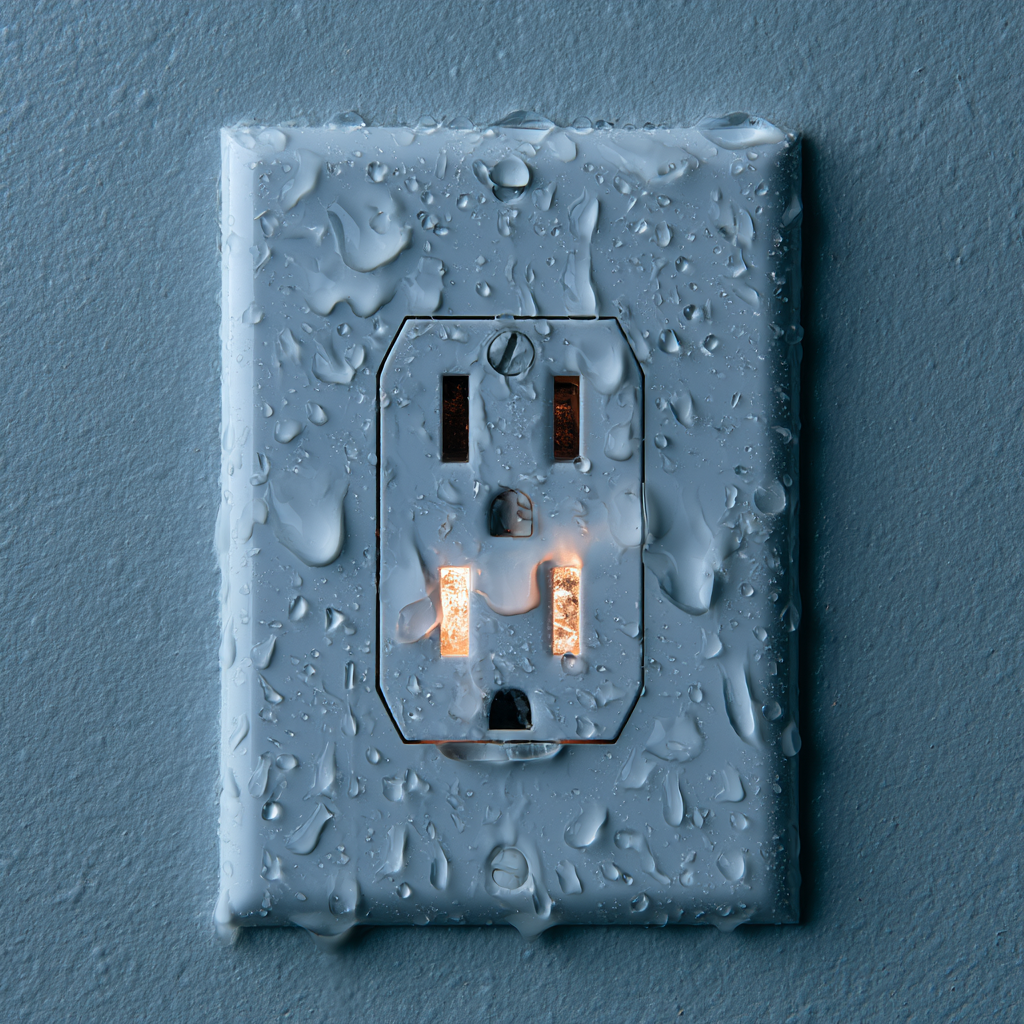
The lights are up, the timer is set, and then the first rainy or snowy night arrives and everything goes dark. You go outside, find the outdoor outlet tripped, reset it, and it happens again the next night.
This is one of the most common calls we get between Thanksgiving and New Year’s. The good news is that a tripping GFCI is usually doing its job, and the cause can almost always be found and fixed.
What a GFCI does, and why it matters outside
A ground fault circuit interrupter (GFCI) cuts power in a fraction of a second when it senses current leaking where it shouldn’t, such as through water or a person. That’s why outdoor outlets need one. The Electrical Safety Foundation International (ESFI) recommends plugging all outdoor lights into GFCI-protected outlets.
Never bypass a GFCI or plug outdoor lights into an unprotected indoor outlet to stop the tripping. If it keeps tripping, something is wrong, and the GFCI is warning you.
6 common reasons outdoor GFCIs trip in winter
- Water in plug connections. Rain, melting snow and condensation get into the joints where strands or extension cords connect. This is the number-one cause.
- Indoor-rated lights or cords used outside. Indoor products aren’t built for moisture. Look for packaging marked for outdoor use.
- Too many lights on one circuit. Older incandescent strands draw much more power than LEDs. Overloading can trip the breaker or GFCI and is a fire risk.
- Damaged cords and strands. Cracked insulation, chewed wires or crushed cords from last year let moisture reach the conductors.
- An old or failing GFCI. GFCIs wear out, especially outdoors. An older unit may trip randomly or stop protecting you at all.
- No weatherproof cover. Outdoor outlets should have an “in-use” (bubble) cover that stays closed while something is plugged in. A flat flip cover lets water in as soon as a cord is connected.
Quick fixes you can try
- Lift cord connections off the ground. Use stakes or hang them from railings so they don’t sit in puddles or snow.
- Wrap plug-to-plug connections in outdoor-rated connection covers.
- Switch to LED strands. They draw far less power.
- Spread your display across more than one circuit.
- Inspect every strand and cord before plugging it in, and throw out anything damaged.
- Test the GFCI monthly using its TEST and RESET buttons.
When you need an electrician
If the GFCI trips with nothing plugged in, won’t reset, or is warm to the touch, call a pro. The same goes if you don’t have enough outdoor outlets for your display and you’re running cords through doors and windows.
We can:
- Replace worn GFCIs with weather-resistant (WR) models and proper in-use covers (switches and outlets)
- Add new outdoor outlets or a dedicated circuit for holiday and landscape lighting
- Install switched or timer-controlled outlets on your roofline or porch, or connect them to your smart home system
- Track down hidden ground faults in buried wiring or outdoor fixtures (troubleshooting and repairs)
Light up safely this season
Want to stop resetting your outlet every night? Book an outdoor outlet visit with TMB Electric in Salem, NH. If something sparks, smokes or smells like it’s burning, turn off the circuit and call our 24/7 emergency electricians.


)