


With TMB Electric in Salem, NH, you get tower crews and electricians operating as one turnkey unit with one plan, one schedule, and one safety standard from the tower top to the power plant. You avoid stalled handoffs by aligning civil, grounding, power, lighting, and closeout work under shared checklists, common QA/QC, and real-time field reporting. You troubleshoot end-to-end in one dispatch, confirm symptoms once, and fix root causes fast. Keep going to see how this cuts risk and speeds turnover.
Turnkey Telecom Services: What “One Team” Includes
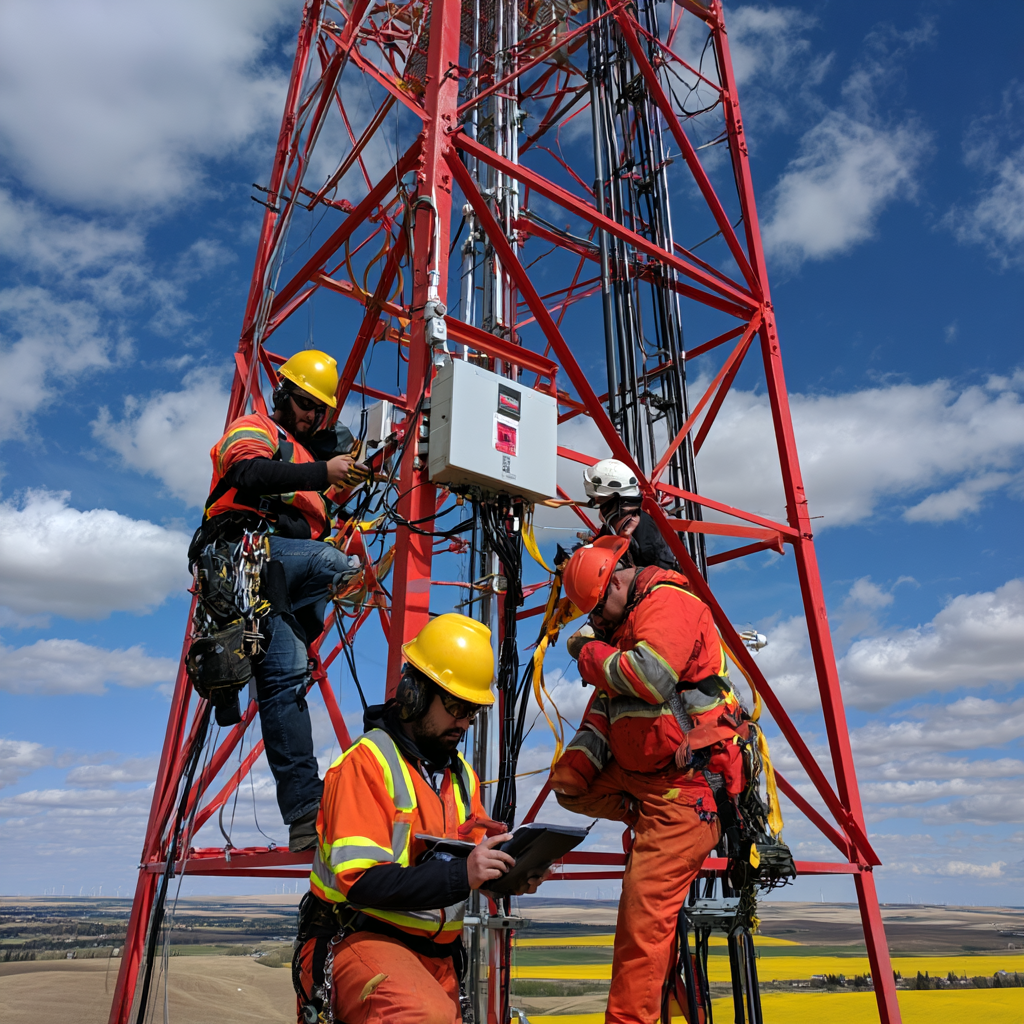
What does “one team” really mean on a telecom project? It means you run tower crews and electricians as a single, coordinated unit with one plan, one schedule, and one safety standard. You align scope from civil and grounding through power, lighting, and closeout so handoffs don’t stall production. You use shared checklists, common QA/QC, and real-time field reporting to keep decisions fast and measurable. You standardize safety training across disciplines, so every person works to the same fall protection, lockout/tagout, and site-control expectations. You accelerate crew onboarding with repeatable site-readiness briefs, tool-control rules, and communication protocols. You innovate with pre-task planning, modular material staging, and data-driven lessons learned that reduce rework and protect uptime.
Why Turnkey Beats Multi-Vendor Tower Builds
Where do tower builds lose the most time and safety margin? In handoffs—when one vendor finishes, another mobilizes, and your schedule sits idle. With multiple scopes, you manage competing priorities, mismatched documentation, and fragmented accountability. Those multi-vendor drawbacks show up as rework, stop-work events, and escalations that drain budget and confidence.
A turnkey philosophy compresses decisions, clarifies ownership, and keeps your plan moving with fewer interfaces to police. You get one coordinated schedule, one safety standard, and one quality bar that’s measured daily. That alignment lets you forecast accurately, lock materials and staffing earlier, and resolve issues fast before they become incidents. If you’re pushing aggressive deployment targets, turnkey delivery isn’t just convenient—it’s a risk-control strategy that delivers predictable outcomes and safer execution.
Where Tower and Electrical Work Overlap Onsite
Onsite, you’ll see tower and electrical scopes converge where integrated power and RF equipment must be installed and commissioned as one coordinated system. You’ll align grounding and bonding across steel, cabinets, and cable paths so every connection meets spec and protects the network. You’ll also lock in site electrical safety alignment—clear LOTO, verified de-energization, and controlled access—so production stays on schedule without compromising compliance.
Integrated Power And RF
How do you keep a tower build moving fast without risking rework or safety gaps? You integrate power and RF decisions on the same day, with tower crews and electricians aligned to one coordinated plan. When power routes, cabinet layouts, and coax paths get approved together, you protect power integrity and preserve RF shielding without slowing production. You’ll cut truck rolls, shorten punch lists, and reduce interference-driven callbacks by designing for real-world climb constraints and energized work boundaries.
- Co-plan equipment placement, cable paths, and penetrations before anything’s mounted.
- Validate AC/DC capacity, breaker labeling, and load balance against the RF design.
- Enforce separation, strain relief, and connector protection during pulls and terminations.
You’ll deliver cleaner commissioning, predictable closeout, and a safer site that stays schedule-tight.
Grounding And Bonding Coordination
When do grounding and bonding decisions turn into schedule killers? When tower crews land new steel, electricians pull feeders, and nobody owns the interface. You prevent rework by locking grounding coordination early: confirm the site’s grounding electrode system, test existing impedance paths, and map every connection point from tower leg to shelter bus.
You’ll move faster when one crew sequences attachments and terminations in the same window. Standardize bonding practices for waveguide bridges, cable trays, ice bridge, and equipment racks, and document torque values, lug types, and conductor routing before metal goes up. You also eliminate “field engineering” by pre-kitting labels, connectors, and exothermic materials and capturing as-builts in real time. The result: predictable inspections, cleaner closeout packages, and fewer RF performance surprises.
Site Electrical Safety Alignment
Where do tower work and electrical scope collide hard enough to create real risk and real delays? It happens at the base, in the shelter, and on the steel—right where energization, rigging, and access share the same footprint. You reduce incidents and rework when you align site safety with real-time electrical coordination, not after-the-fact paperwork.
- Lockout/tagout plus climb control: You stage cutovers, verify zero-energy, and restrict ascent until circuits and pathways are cleared.
- Shared hazard map: You mark underground, conduits, generator feeds, and fall zones so crews don’t cross hazards blindly.
- Single on-site lead: You run one pre-task brief, one change log, and one stop-work trigger.
That alignment keeps installs moving, passes inspections faster, and protects your people.
Planning Tower + Power Together (Schedule, Permits, Materials)
Even if your tower scope seems separate from your electrical scope, you’ll get faster, safer deployments by planning them as one coordinated build. You align milestones so crane time, power shutoffs, inspections, and RF work don’t collide. With early design coordination, you lock grounding, conduit routes, equipment pads, and cable paths before crews mobilize, cutting rework and exposure hours.
You also streamline permit workflows by bundling civil, electrical, and structural submittals, tracking AHJ comments in one log, and scheduling utility coordination up front. On materials, you stage long-lead gear—disconnects, panels, breakers, fiber raceways, and grounding kits—so nothing delays the critical path. You’ll reduce site visits, keep crews inside engineered limits, and deliver predictable on-air dates with fewer change orders.
Turnkey Telecom Installs: New Builds, Upgrades, Retrofits
You set your new build up for success by confirming site readiness early—access, grounding, power, and staging—so crews mobilize once and hit schedule without compromising safety. When you’re upgrading or retrofitting, you execute with controlled cutovers, tight QA/QC, and precise as-builts to protect uptime and meet spec. You get a single, accountable install path that reduces rework, manages risk, and delivers performance on day one.
New Build Site Readiness
A new build telecom site can’t hit schedule or pass inspections unless it’s truly ready from day one. You set the pace by locking scope, access, and safety controls before crews mobilize, so every hour on-site drives measurable progress, not rework.
- Validate civil and power prerequisites: grounding, conduit paths, clearances, and labeled disconnects, with JHAs and rescue plans briefed.
- Confirm materials and logistics: kitted BOMs, staging zones, lift plans, and fleet optimization that aligns trucks, tools, and certified labor to the critical path.
- Prove readiness with documentation: as-built baselines, permits, photos, and silent data from prechecks that flags risks early and supports inspection-ready turnover.
When you standardize these gates, you reduce hazards, compress timelines, and protect commissioning dates.
Upgrade And Retrofit Execution
Where do upgrades and retrofits win or lose schedule? You win when you sequence tower and electrical scopes as one plan, not two handoffs. You lose when RF swaps, power cutovers, and closeout docs collide. You keep momentum by pre-validating mounts, fiber routes, grounding, and available amperage, then locking a day-by-day cut sheet everyone signs.
You’ll execute faster when your crew stages parts by task, not by box—material sourcing ties directly to your critical path. You’ll stay safer when you control exposures: energized work boundaries, rescue plans, weather triggers, and lift zones. Your risk mitigation improves when you scan for clashes, verify as-builts, and update drawings in real time. You finish with verified testing, labeled terminations, and punch-list-free turnover.
Telecom Power Work: ATS, Batteries, Grounding, Generators
- Commission ATS logic, exercise transfer, and verify bypass procedures.
- Load-test batteries, confirm charging profiles, and set alarms.
- Bond and ground to spec, then test generator start, fuel, and load acceptance.
One-Team Troubleshooting That Restores Service Faster
How fast can you get a site back online when the alarms start stacking up? You move faster when one team owns the full troubleshoot, from the tower top to the power plant, without handoffs. TMB Electric brings climbers and electricians under one dispatch, so you confirm symptoms once, isolate root cause, and execute the fix immediately. You avoid Turnkey pitfalls like split responsibility, duplicate rolls, and “not my scope” delays. With tight vendor integration, you validate OEM parameters, coordinate NOC updates, and align spares, firmware, and replacement parts before you arrive. You document readings, changes, and closeout photos in real time, so you restore service, protect uptime, and shorten MTTR across every visit. You also standardize checklists across the entire footprint.
Safety & Compliance for Tower and Electrical Scopes
You can’t afford gaps between tower work and electrical scope safety, so you run unified protocols that keep every crew aligned from climb plan to energization. You coordinate code compliance across OSHA, NESC, NEC, and local AHJs to prevent rework, citations, and delays. You standardize documentation, inspections, and sign-offs so you protect people and hit schedule with confidence.
Unified Safety Protocols
Across tower climbs and electrical tie-ins, unified safety protocols keep risk controlled and crews compliant from day one. You gain sleek coordination by aligning expectations before anyone leaves the ground, so your schedule stays intact and your incident exposure drops. With unified briefings, you standardize roles, hazards, and stop-work triggers across disciplines, keeping decisions fast and consistent.
- Run one pre-task plan that covers fall protection, energized work boundaries, and rescue readiness.
- Use shared checklists and digital sign-offs so you can verify training, PPE, and equipment status in real time.
- Execute synchronized tailgate updates when conditions shift, so both crews adapt together and keep momentum.
You’ll see fewer handoff gaps, cleaner documentation, and a safer, smarter path to on-air readiness.
Code Compliance Coordination
Unified safety briefings set the baseline, but code compliance keeps the work defensible when tower and electrical scopes intersect. You align your tower crew and electricians around one requirements matrix—NEC, NESC, grounding, bonding, fall protection tie-ins, and equipment labeling—so nothing slips between trades. You standardize checklists for power drops, disconnects, and cabinet terminations, then verify torque, conductor sizing, and clearances before energization.
With permit coordination, you sequence inspections to match lift plans and cutovers, reducing remobilizations and keeping AHJs confident. You document as-builts, photos, and test results in a shared field app, enabling fast closeout and repeatable quality. When you treat compliance as a design input, you protect uptime, control risk, and accelerate deployments without rework.
Quality Control From Rigging to Closeout Documentation
How do crews keep a telecom build safe, on-spec, and audit-ready from the first lift to the final sign-off? You bake quality control into every handoff, using shared checklists, photo logs, and real-time issue tracking so nothing gets buried. You protect people first, then performance, then paperwork.
- Rigging to lift plan: You verify anchor points, torque, and load paths, improving rigging efficiency while stopping near-misses before they start.
- Install verification: You confirm RF, grounding, conduit, and panel labeling against drawings, then tag deviations immediately for rapid correction.
- Closeout documentation: You capture as-builts, test results, torque sheets, and redlines, then package a clean, searchable closeout that sails through audits and accelerates turnover.
How to Choose a Turnkey Telecom Contractor (Checklist)
Where do you start when every “turnkey” telecom contractor claims they’ll handle it all? You start with outcomes: schedule certainty, zero-incident execution, and clean closeout. Use this collaboration checklist to vet any turnkey vendor: verify tower and electrical crews operate under one safety program, one foreman, and one QA/QC pipeline. Ask for documented rescue plans, energization procedures, and rigging inspections. Confirm they run pre-task planning daily and track leading indicators, not just lagging incidents. Demand digital as-builts, photo logs, and test reports in a single handoff package. Evaluate how they coordinate RF exposure controls, grounding, and commissioning without handoffs. Finally, review past performance: rework rates, punch-list cycle time, and change-order discipline. Choose the partner that proves repeatable, safer speed.
Frequently Asked Questions
Do You Offer Emergency Storm-Response Crews for Telecom Sites?
Yes—you can deploy emergency storm-response crews for telecom sites. You’ll get rapid emergency coordination, clear ETAs, and safety-first mobilization that protects people and assets. You’ll strengthen storm readiness with pre-staged materials, verified access plans, and incident reporting that keeps stakeholders aligned. You’ll restore service faster through innovative workflows, real-time updates, and standardized QA/QC. You’ll also receive post-event assessments, documentation, and recommendations that harden your network for next time.
What Geographic Regions and Travel Distances Do Your Teams Cover?
You get broad regional coverage: we primarily serve the Southeast and Mid-Atlantic, and you can deploy us nationwide when scope and timelines demand it. Near sites, you move fast; far sites, you plan smarter—that contrast drives uptime without cutting corners. You’ll set travel logistics upfront, including mobilization windows, per diem, and access requirements. You keep safety first with site-specific plans, compliant crews, and innovative coordination tools for predictable execution.
Can You Work Under Union Requirements or Project Labor Agreements?
Yes—you can work with us under union requirements or project labor agreements. You’ll get documented union compliance, signatory coordination when needed, and crews briefed on site rules before mobilization. You’ll protect schedule certainty through proactive staffing plans, certified supervision, and clear jurisdictional scopes. You’ll reduce risk with strict safety controls, daily JSAs, and audit-ready reporting. You’ll also gain innovation through digital field logs, real-time progress dashboards, and rapid issue escalation.
How Do You Price Turnkey Telecom Projects—Lump Sum or Time-And-Materials?
You don’t pick just one: you price turnkey telecom projects as lump sum when scope’s tight, and you switch to time-and-materials when discovery’s inevitable—because “surprises” always show up on schedule. Your pricing strategy starts with a site-walk, constructability review, and safety plan, then you set risk allocation: you carry production risk; the client owns unknown conditions. You lock milestones, unit rates, and change triggers to protect uptime and outcomes.
Do You Provide Financing Options or Phased Billing for Large Deployments?
Yes—you can use financing options or phased billing for large deployments. You’ll structure payments around milestones like permitting, materials procurement, site readiness, and closeout, so cash flow matches progress and performance. You’ll lock in scope, safety plans, and QA checkpoints up front to reduce change orders and downtime. You can also bundle sites into waves, enabling faster launches, tighter schedule control, and predictable reporting. You’ll keep crews compliant and productive.
Conclusion
When you choose a one-team turnkey partner, you cut handoffs, compress schedules, and keep accountability clear from rigging to energization. You’ll avoid the costly “gap” between tower and power—where delays and safety risks hide. Industry data shows rework can consume up to 30% of total construction cost, so getting tower crews and electricians aligned from day one protects your budget and your uptime. You’ll close out faster, with safer installs and cleaner documentation.


