



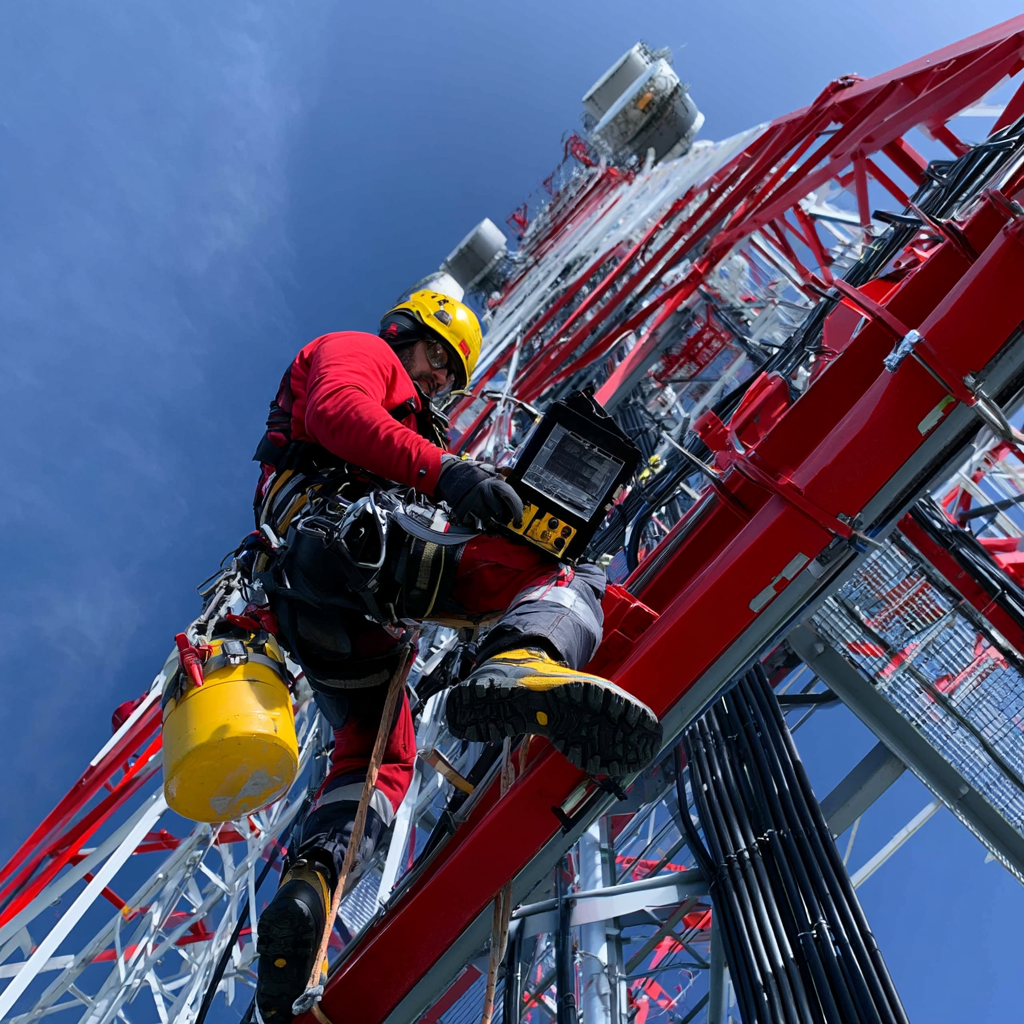
You start by checking the New England forecast—wind, gusts, lightning distance, icing risk—and you log hard go/no-go thresholds before leaving the truck. You review the scope and permits, brief the crew, set controlled zones, and walk down the tower base to inspect for damage and approved anchors. You stage PPE and rescue gear, assign rescuer and spotter roles, then climb with 100% tie-off through every transition. You hoist with taglines, manage RF limits, verify alignment, fix faults, and close out with photos and logs. Keep going to see how each step stays disciplined.
A New England Tower Tech’s Typical Day
Before the sun’s fully up, you’re already checking the forecast, wind speeds, and any lightning risk, because the day’s plan starts with what the weather will allow. You log conditions, confirm access, and lock in weather planning thresholds so you don’t improvise aloft. At the yard, you review the scope, verify permits, and run a quick tailgate brief with the crew.
On site, you establish controlled zones, document tower condition, and validate anchor points for rope systems before you commit weight. You climb methodically, keep comms tight, and follow the task sequence to reduce exposure time. You capture photos, torque readings, and as-built notes in a mobile workflow, then sync them to the project dashboard. You wrap by debriefing, flagging issues, and scheduling rechecks.
Safety Gear: Harness, Helmet, PPE Checklist
How do you keep a routine climb from turning into an incident? You start with uncompromising safety gear and a repeatable system. Inspect your full-body harness: webbing free of cuts, stitching intact, D-rings unbent, labels legible, and shock pack in date. Confirm your lanyards and SRL lock withstand a sharp tug, and that the carabiners auto-close and won’t cross-load. Seat your helmet correctly, with the chin strap secured, and check the suspension for cracks. Gloves need grip without sacrificing dexterity; eye protection must seal against wind-driven grit. Run your PPE checklist digitally so every item is time-stamped and auditable. Do quick weather checks for go/no-go input, then stage gear for clean, snag-free access.
New England Weather Checks Before the Climb
When does a “clear” New England morning turn into a no-go climb? You don’t guess—you verify. Start with radar loops and aviation METARs for fast-shifting weather patterns, then cross-check local mesonet data for gust spikes. Run wind forecasting at tower height, not ground level, and note directional shear that can whip a gin pole or snag a tagline. Confirm temperature, dew point, and cloud base to flag icing risk and sudden fog. Check fronts and sea-breeze boundaries that can flip winds in minutes along the coast. Set hard thresholds for sustained wind, gusts, lightning distance, and precip type, and log them before you leave the truck. If the trend line worsens, you delay.
Pre-Climb Tower Walkdown and Rescue Roles
Before you climb, you’ll complete a ground-level structural walkdown, checking the base, members, and hardware for damage, corrosion, and loose components. You’ll verify approved anchors and tie-off points, confirming ratings, access, and clear paths for 100% tie-off. Then you’ll assign rescue team roles, confirm gear and communication, and align on the plan before anyone leaves the ground.
Ground-Level Structural Walkdown
Out here at ground level, the climb starts with a structural walkdown, not a harness check. You circle the compound, scanning legs, bracing, and base plates for corrosion, fresh impact marks, missing hardware, or spalled grout. You look up the full run for twist, out-of-plane members, ice scars, and bird-nest obstructions, then cross-check against last inspection photos and load notes.
You run a quick safety briefing: who’s primary climber, who’s dedicated rescuer, who’s ground spotter, and who’s calling 911 if it goes sideways. You confirm rescue gear staging, access routes, gate codes, and weather triggers. You log findings in a mobile checklist, tag anomalies, and stop work if anything doesn’t pass.
Verify Anchors And Tie-Offs
How do you know the tower’s ready to hold you? You confirm every rated connection before boots leave the ground. Start with Anchor inspection: identify engineered tie-off points, verify labels and capacity, and check for corrosion, deformation, missing hardware, or sharp edges that could cut webbing. Test access orientation so you’ll load the anchor in its designed direction, not across a bolt or around a member. Then lock in Lanyard selection: match length and energy absorber to the climb path, clearance, and potential swing-fall. Ensure connectors are compatible, gates close and lock, and the D-ring sits correctly. Set 100% tie-off transitions you can execute smoothly, even with gloves and wind.
Assign Rescue Team Roles
Once you’ve confirmed the anchors and tie-offs will take a load, you assign rescue team roles so nobody’s guessing if something goes wrong at height. You name a primary rescuer, a backup, and a ground lead who controls the scene, calls 911, and manages traffic and weather updates. You set radio channels, hand signals, and a stop-work word, then verify everyone can repeat them.
You stage rescue gear at the base: descent device, prusiks, cutting tool, trauma straps, spare lanyard, and first-aid/AED. You define who rigs, who lowers, who treats, and who documents times. You run a quick “what-if” drill drawn from indoor training, then adapt it to site hazards—like ice, RF, and even treehouse maintenance access paths.
Climbing With 100% Tie-Off, Every Step
You climb under 100% tie-off, which means you’re always connected to the structure with at least one rated lanyard or SRL before you move. You choose approved anchor points, confirm their strength and orientation, and manage your lanyards to prevent slack, cross-loading, or contact with sharp edges. At every step and transition, you clip the next connection first, then shift your weight and unclip only after you’ve verified you’re secure.
Understanding 100% Tie-Off
Up on a lattice tower, one unclipped moment can turn a routine climb into an emergency. You treat 100% tie-off as a continuous process, not a rule you remember mid-climb. Before you move a hand or boot, you confirm you’re secured, then shift deliberately so you’re never fully free. You pause at each change in position, check your balance, and keep your center of gravity tight to the structure. You manage slack so a slip can’t build momentum, and you avoid rushing when gloves, tools, or radios compete for attention. In tower maintenance, you pair this discipline with weather readiness: gusts, ice, and heat all increase error rates. You climb like a system, not a person. Every move is verified, repeatable.
Anchor Points And Lanyards
100% tie-off only works when every connection has a planned place to land. You verify anchor points are rated, compatible with the structure, and positioned to limit free-fall and swing. You choose lanyards that match the task: twin-leg for continuous attachment, energy-absorbing for climbing, and positioning for hands-free work. Before you leave the ground, you run inspection procedures—check webbing for cuts, stitching for pulls, hardware for cracks, gates for snap-back, and labels for legibility. You confirm fall protection devices interface cleanly with your harness D-rings and don’t cross-load connectors. You keep connectors oriented, locked, and free of grit, ice, or paint. You log defects immediately and tag gear out.
Safe Transitions Every Step
Where do most climbing incidents start—at the transition? You manage it by staying 100% tied off from ground ladder to fixed ladder, to vertical system, to platform. Before you move, you stage your next connection at chest height, confirm the gate closes, then transfer one lanyard at a time. You keep three points of contact and don’t step up until you’ve felt load on the new attachment. Follow ladder etiquette: face the ladder, keep tools tethered, and never pass another climber in the fall line. For facility safety, you verify access control, inspect rung condition, and call out hazards below. Use a smart double-leg lanyard and energy absorber to reduce transition time without cutting corners.
Rigging and Hoisting Without Dropped Tools
How do you move steel, antennas, and hardware hundreds of feet up a tower without turning a single bolt into a falling hazard? You start with a lift plan, load weights, and a clear drop zone, then inspect slings, shackles, and hooks for wear that creates rigging hazards. You tag every piece, confirm the working load limit, and keep angles within spec to prevent shock loading.
You run tool management like an engineered system: tethered tools, closed pouches, and hardware in lanyarded buckets, never loose in pockets. You use a controlled hoist with tagline control, steady comms, and hands-off transfer points. You pause on snag risk, re-route lines, and document near-misses so tomorrow’s setup gets smarter.
Antenna Alignment and RF Exposure Control
Before you ever loosen a mount or bump an azimuth, you treat antenna alignment as a two-part job: hit the spec and control RF exposure. You verify the latest drawings, then stage smart tools—digital inclinometers, laser range checks, and calibrated compasses—to reduce rework aloft. You coordinate with NOC for power reductions and document limits so nobody guesses in the field. You keep your body position and time-in-sector tight, because small choices change exposure fast at height. When you’re ready, you move in measured increments, lock hardware to torque, and re-verify against target bearings.
- Confirm sector, tilt, and azimuth tolerances
- Request RF mute/reduce windows and log them
- Use a personal RF monitor and set alarms
- Maintain minimum approach distances and time limits
- Final-scan alignment, then tag conditions for sign-off
Fixing Faults: Jumpers, Radios, and Power
Sometimes the tower tells you what’s wrong the moment you put hands on the line: a loose jumper, a waterlogged connector, a radio that won’t pass traffic, or a power feed that’s sagging under load. You slow down, maintain 100% tie-off, and start fault diagnostics with a meter, torque wrench, and visual inspection. You keep strict tool organization so nothing drops and every connector gets the right die, tape, and sealant. You de-energize when required, verify zero voltage, then re-terminate jumpers with proper bend radius and strain relief. If a radio’s suspect, you check alarms, RSL, and Ethernet links, then swap modules only after confirming grounding and weatherproofing. You restore power gradually and watch current draw for instability.
Closeout: Post-Climb Checks, Photos, Logs
After you’ve corrected the fault and confirmed stable readings, the closeout starts with a disciplined post-climb check: you re-verify 100% tie-off until you’re off the structure, scan the work zone for loose hardware and dropped-object risks, and confirm every connector is torqued, sealed, and strain-relieved to spec. You document proof fast and clean, using time-stamped photos and digital logs that sync to the client portal.
- Capture wide and close-up photos of jumpers, radios, and grounds
- Record pre/post values, alarms cleared, and firmware revisions
- Note tower ergonomics impacts: reach, routing, and abrasion points
- Verify labels, port maps, and as-left configuration matches design
- Check weather radios, forecast shifts, and secure the site for egress
You finish with a final sweep: tools accounted for, gates locked, and your closeout signed.
Frequently Asked Questions
How Do Tower Techs Become Certified in New England?
You become certified in New England by completing certified training through providers aligned with NATE, OSHA, and ANSI/ASSE fall-protection standards. You’ll take classroom modules, hands-on climbs, rescue drills, and RF awareness, then pass written and practical exams. You document hours, renew credentials on schedule, and keep medical fit testing current. You treat equipment safety as nonnegotiable: inspect harnesses, lanyards, and anchors, and log results using digital checklists.
What’s the Typical Salary Range for Entry-Level Tower Technicians?
Can you picture your first climb while your paycheck reflects the risk and precision? You’ll typically earn $40,000–$55,000 a year, or about $18–$26/hour, in entry level salaries, with per diem and overtime pushing higher. You protect that upside by following credentialing pathways—OSHA 10/30, RF awareness, rescue, and manufacturer training—so you work faster, safer, and with fewer callbacks on complex, modern builds.
How Often Do Tower Techs Travel or Work Overnight Away From Home?
You’ll travel often: many tower tech roles run on weekly or biweekly rotations, so you’re away overnight 2–5 nights most weeks, depending on the market and project load. You’ll follow Travel itineraries that group sites to reduce drive time and fatigue risk. When crews deploy new Access technologies, you’ll see more multi-day builds and commissioning. You’ll still return home between phases when weather, permits, and safety plans require resets.
What Tools or Apps Help Tower Techs Plan Routes and Site Access?
Like a compass cutting through fog, you rely on digital tools to streamline Route planning and Site access. You’ll use Google Maps or Waze for traffic-aware routing, plus Gaia GPS or OnX for off-road tracks and gate locations. You’ll check carrier portals and permit apps for access windows, contacts, and lock codes. You’ll log hazards in SafetyCulture iAuditor, then share ETAs and coordinates via Teams. You won’t roll out without verified entry.
What Career Paths Can Tower Technicians Move Into After a Few Years?
You can move into career paths such as lead climber, crew chief, safety manager, field engineer, RF technician, project coordinator, or construction manager, and pivot into DAS/5G small-cell integration or drone-based inspection. You’ll advance fastest by nailing certification steps: OSHA 30, competent climber/rescue, rigging/signaling, RF awareness, and PMP or NICET as needed. You’ll keep documentation tight, run audits, and mentor newer techs safely.
Conclusion
You finish the day the same way you started: deliberate. You double-check every connector, torque mark, and ground lead, then log photos and notes before you leave. If you’re thinking, “I’ll remember it tomorrow,” you won’t—weather, fatigue, and turnover erase details fast. Documentation is part of safety. You stow tools, inspect your harness for wear, and confirm the site’s secure before driving out under New England’s shifting sky.


