


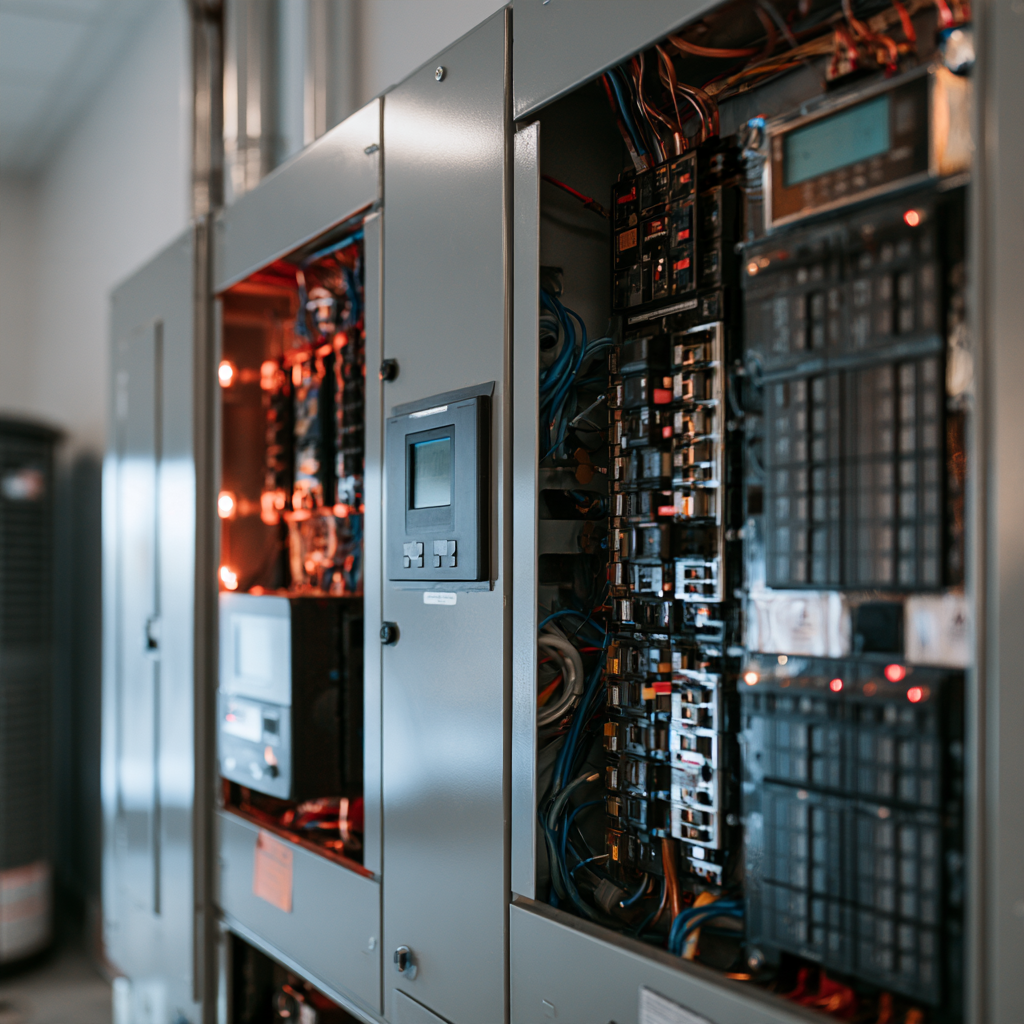
Upgrading to a smart electrical panel gives you real-time circuit monitoring, controllable loads, and better planning for EV charging, solar, batteries, or a generator. You’ll typically pay $2,500–$5,000 installed, but energy-management habits may reduce bills by 5%–30%. Licensed installation, permits, proper grounding, and listed transfer equipment remain essential. During outages, breakers still provide code-required protection while smart controls can prioritize critical circuits. Continue for cost, safety, and setup guidance.
Is a Smart Electrical Panel Worth the Cost?
A smart electrical panel can justify its higher upfront cost when it supports planned upgrades such as an EV charger, solar array, or battery storage. You’ll typically invest $2,500–$5,000 installed, versus $1,200–$2,500 for a conventional panel, so value depends on your roadmap.
A Smart Electrical Panel gives you energy monitoring, circuit-level control, and visibility into real-time energy use. Smart panels offer automated load management that can coordinate EV chargers, solar panels, and battery storage while helping prevent overloads within code-compliant design limits. Depending on rates and usage, you may reduce energy bills by 5%–30%, or roughly $107–$641 annually. Savings are stronger with time-of-use pricing. If you won’t add controllable loads or change your energy profile, a standard upgrade may deliver better value.
Signs Your Home Needs a Panel Upgrade
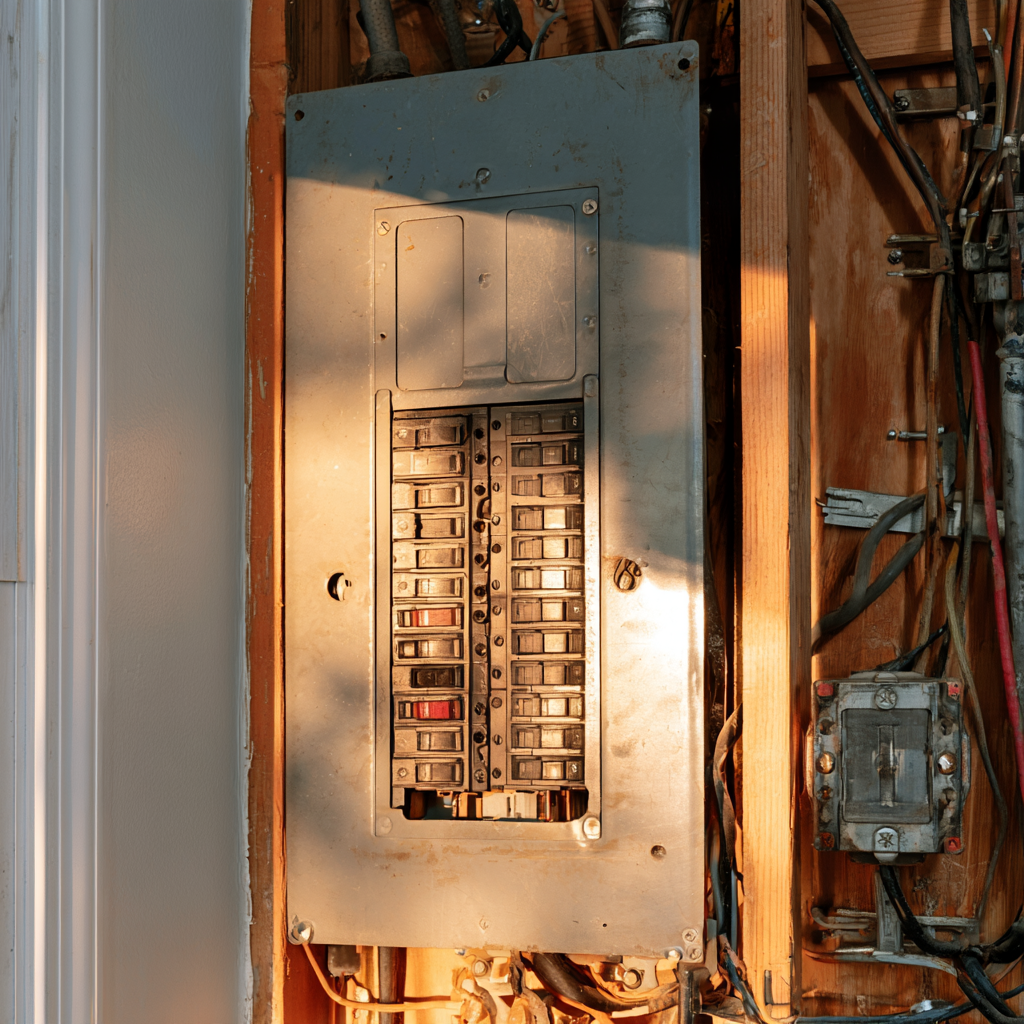
If your 100-amp panel can’t reliably support modern loads such as HVAC equipment, EV charging, or an updated kitchen, you may need more electrical capacity. Frequent breaker trips—especially across multiple circuits—can signal overloads or faults that require a qualified electrician’s evaluation. Don’t ignore recurring trips; a code-compliant panel upgrade can improve circuit protection and provide space for future loads.
Insufficient Electrical Capacity
Frequent breaker trips—especially when your heat pump, central air conditioner, EV charger, or other high-demand equipment operates—often signal that your electrical panel lacks sufficient capacity for modern loads. A traditional electrical panel rated at 100-amp may not support today’s electrical load, including EV charging, induction cooking, and electrified HVAC.
You shouldn’t force compromises by sharing circuits or delaying planned additions. A licensed electrician can perform a code-compliant load calculation to identify insufficient electrical capacity and determine whether upgrading your electrical system requires a 200A service upgrade. This approach creates safe headroom for advanced equipment and future electrification. It also supports properly engineered generator integration, rather than unsafe connections to an overloaded service. If capacity limits affect multiple circuits, address the service rating before installing new high-demand technology.
Frequent Breaker Problems
Don’t dismiss breakers that trip repeatedly under normal use. When heat pumps, dryers, central air, or EV charging trigger outages, your home electrical system may be undersized, degraded, or poorly coordinated. Frequent breaker problems can also signal a short circuit and surge risk, especially if you notice warm breakers, corrosion, loose hardware, or burning odors. Stop using affected circuits and schedule a licensed electrician’s inspection.
Modern panel upgrades improve capacity and protection through smart electrical panels and smart circuit breakers that monitor loads and identify abnormal demand. They also create code-compliant space for a home battery and generator integration, helping you manage power outages safely. If startup spikes from ovens, HVAC equipment, or chargers cause repeated trips, don’t add equipment first. Upgrade the panel so it can support innovative energy technologies without compromising safety.
Smart Panel Safety, Monitoring, and Control
Smart electrical panels strengthen home electrical safety by pairing circuit-level sensing with smart breakers that flag unusual consumption and potential overloads before they escalate. You gain smart panel safety through real time monitoring that identifies unusual activity at individual circuits, helping you respond before a fault becomes disruptive. Smart circuit breakers add overload protection while supporting remote control functions, including scheduled operation and circuit shutoff, for disciplined energy management and home automation.
Your panel still distributes power through physical breakers if the internet or app fails, preserving an essential safety backstop. However, remote diagnostics and controls may be unavailable, and cloud-dependent protections can be limited during an outage. A licensed electrician should configure breaker ratings, essential loads, and installation requirements to applicable electrical codes. This design delivers innovation, resilience, and greater peace of mind.
Smart Panel Energy Monitoring and Savings
A smart electrical panel gives you real-time, circuit-level energy data, so you can identify the appliances and systems that drive consumption and demand peaks. Through smart breakers or circuit monitoring modules, you’ll see energy use across individual circuits and detect unusual energy consumption that may signal an inefficient appliance, overloaded equipment, or developing electrical issue.
Use this energy monitoring insight to shift high-draw loads to lower-cost periods, reduce avoidable runtime, and verify whether efficiency changes deliver results. Trend data also helps you prioritize code-compliant upgrades based on measured demand rather than assumptions. Depending on your rates, usage, and load-management habits, a smart panel may support annual cost savings of roughly 5% to 30%. Continuous circuit monitoring gives you a practical, data-driven path to stronger energy efficiency while maintaining safe, informed operation.
Smart Panels for Solar, EVs, and Batteries
A smart panel uses circuit-level data to coordinate solar production and battery storage, helping you maximize self-consumption and manage peak demand. It can balance EV charging with other major loads, which may let you add a charger without an immediate service upgrade when a qualified electrician verifies capacity and code compliance. During an outage or low-solar period, you can prioritize battery-backed circuits while basic distribution remains available if network-based controls go offline.
Solar Production And Storage
When paired with solar generation and battery storage, a smart electrical panel can monitor circuit demand in real time and prioritize how your home uses available energy. It coordinates solar energy, energy production, and energy storage, directing surplus output to a home battery system when demand is low and deploying battery backup during costly peak periods.
These smart components support integration with renewable energy sources while maintaining code-compliant overcurrent protection and locally operating breakers. You can set priorities for essential loads so homes power critical circuits first during an outage. Compatible ecosystems, including SPAN, Lumin, Leviton, and Schneider Home Pulse, can improve visibility across solar and storage equipment. Network loss may limit remote controls, but protective functions continue. This architecture also prepares your electrical infrastructure for electric vehicles without compromising safe battery operation.
EV Charging Load Management
Smart electrical panels manage EV charging as a controlled load, using circuit-level monitoring and smart breakers to adjust charger demand before simultaneous loads—such as a heat pump, range, or dryer—overload the service or feeder. Your smart panel applies load management to charging stations, throttling or shedding noncritical circuits to prevent power surges and keep electricity within calculated capacity limits.
With compatible solar power and a battery system, you can schedule EV charging around peak generation or excess-energy windows, reducing costly grid consumption. Remote control lets you review circuit status and modify charging preferences without bypassing listed equipment, required overcurrent protection, or code-compliant installation practices. Plan integrated circuits early for future EV growth. This coordinated design improves self-consumption, supports safer demand control, and may defer a costly service upgrade.
Battery Backup Prioritization
Because outages and peak-demand periods can strain limited stored energy, a smart electrical panel uses real-time circuit data to reserve battery capacity for essential loads while shedding or limiting noncritical circuits. You can configure smart panels to protect refrigeration, medical equipment, lighting, and communications while controlling EV charging, HVAC, and other high-draw loads.
Battery backup prioritization improves power distribution by directing excess solar energy into energy storage, then deploying it during peak demand or when you need reserve capacity. Automated load shedding helps prevent overloads when production drops or batteries run low. Proper generator integration can add resiliency, but installation must follow applicable electrical codes, manufacturer requirements, and permitted transfer equipment. In your smart home, this circuit-level intelligence can maximize solar self-consumption, reduce unnecessary grid draw, and support estimated annual energy savings of roughly 5% to 15%.
How Smart Panels Work During Outages
During an outage, a smart electrical panel still performs its core safety role: its physical breakers distribute available power and trip on overloads or faults. During a power outage, you retain code-compliant circuit protection even if smart features go offline. If a network outage disables the hub, internet, or cloud service, energy monitoring, alerts, scheduling, and remote control may pause. Your home electrical system continues operating in a safe “dumb mode,” with standard breakers protecting circuits from overloads.
For homeowners using backup power, generator integration can prioritize selected essential loads when communications and sensing remain available. However, your generator capacity, transfer equipment, and correctly selected circuits ultimately determine reliable operation. Smart panels don’t replace required listed protective devices or proper installation; they enhance visibility and load management when connected. Plan critical loads so they remain safely served even when app-based controls aren’t available.
Smart Panels vs. Traditional Electrical Panels
Choosing between a smart and traditional electrical panel starts with the same nonnegotiable requirement: both must safely distribute power and provide code-compliant overcurrent protection. In smart panels vs. traditional panels, your homeowners electrical system gains real-time circuit monitoring through a monitoring app/web platform, helping identify demand peaks, unusual loads, and opportunities for energy usage optimization. A traditional breaker box reliably protects circuits but provides little live visibility.
When upgrading existing panel equipment, verify listing, load calculations, grounding, and permit requirements. Smart designs can streamline generator integration and solar and batteries support by coordinating selected loads. However, connectivity failures can limit app access and remote control during outages; the panel must still operate safely locally. Traditional panels avoid network dependence, while smart panels deliver granular control for innovation-focused homes.
Smart Electrical Panel Cost and Installation
Smart electrical panel cost and installation depend on your home’s service capacity, circuit count, existing wiring condition, and permit requirements. You’ll typically spend $2,000–$5,000, while complex whole-home smart panels can reach $3,000–$10,000. Compare that with $1,200–$2,500 for conventional panel replacement, recognizing that monitoring and circuit-level control add equipment and labor.
A licensed electrician should manage installation, including wiring and labeling, grounding and bonding updates, and new smart circuit breakers. They’ll coordinate Wis‑Fi/Bluetooth connectivity with the app or hub and obtain a permit and inspection to verify code compliance. Older homes may need service-equipment corrections, while modern loads can require expansion from a 30-slot panel to a 48-slot configuration. Plan generator integration during the electrical scope so critical circuits, controls, and safety interlocks are installed correctly.
How to Choose a Smart Panel and Generator Setup
Start with a whole-home load assessment to match the smart panel, generator capacity, and essential-circuit plan before equipment is selected. Compare smart panels, including SPAN Panel, Lumin, Leviton, and Schneider Home Pulse, for explicit compatibility with your solar, battery storage, and other energy assets. Confirm that generator integration supports circuit-level management, not merely a limited backup subpanel.
Prioritize real-time monitoring, remote circuit control, and automated load shedding so your generator can protect essential circuits and avoid overloads. Ask your licensed electrician to verify service capacity, transfer equipment, grounding, and local code requirements. Request a single quote for the coordinated panel-plus-generator project, permit, and inspection. Remember, your home electrical system may operate like a conventional panel during outages, while app or network failures can temporarily limit smart functions.
Frequently Asked Questions
Does Upgrading an Electrical Panel Save Money?
Yes, you can save money by upgrading an electrical panel when Energy efficiency, circuit optimization, and remote monitoring reduce peak use under changing utility rates. You’ll gain load forecasting for EVs and heat pumps, potentially avoiding costly future upgrades. Safety improvements and reduced downtime also protect equipment and occupants. For rentals, tenant comfort may improve. Confirm code compliance and compare installed costs, incentives, and contractor ROI before committing.
What Are the Pros and Cons of Smart Panels?
Smart panels turn your home into a command center for a thousand energy decisions. You gain Smart panel features, Remote monitoring, Automated load control, Energy usage insights, Demand response options, and Utility integration. You can optimize circuits while maintaining code-compliant breaker protection. However, consider Subscription costs, Installation complexity, Reliability concerns during network outages, and Cybersecurity risks. You’ll still need qualified electrical installation, proper grounding, labeling, and verified compatibility with existing service equipment.
What Is the 80% Rule for Electrical Panels?
The 80% rule means you should limit 80% loading to preserve panel capacity, thermal limits, and a safety margin. You’ll account for continuous loads at 125% during breaker sizing and load calculation, helping prevent conductor heating and nuisance trips. Use disciplined circuit planning so your panel supports present demand without crowding its rating. You’ll also reserve capacity for future expansion, while your electrician verifies code-compliant service and feeder sizing.
How Much Value Does an Upgraded Electrical Panel Add to a House?
An upgraded electrical panel can add roughly 1%–3% to your home’s resale impact, especially when you document code compliance and professional load calculations. A Smart panel strengthens value through safety improvements, circuit expansion, surge protection, appliance efficiency, and energy monitoring. Your installation cost may not return dollar-for-dollar, but you’ll attract buyers seeking electrification-ready infrastructure, reliable capacity, and modern controls that support EVs, solar, batteries, and future upgrades.
Conclusion
A smart electrical panel provides you safer control, clearer energy insights, and better backup power planning. You can monitor circuits, manage EV charging, prioritize essential loads, and support solar or battery systems without overloading your service. Proper installation by a licensed electrician helps ensure compliance with NEC requirements, local permits, and utility rules. Why wait for an outage or overloaded panel to expose a weakness? Upgrade strategically, protect your home, and make every watt work smarter.


