



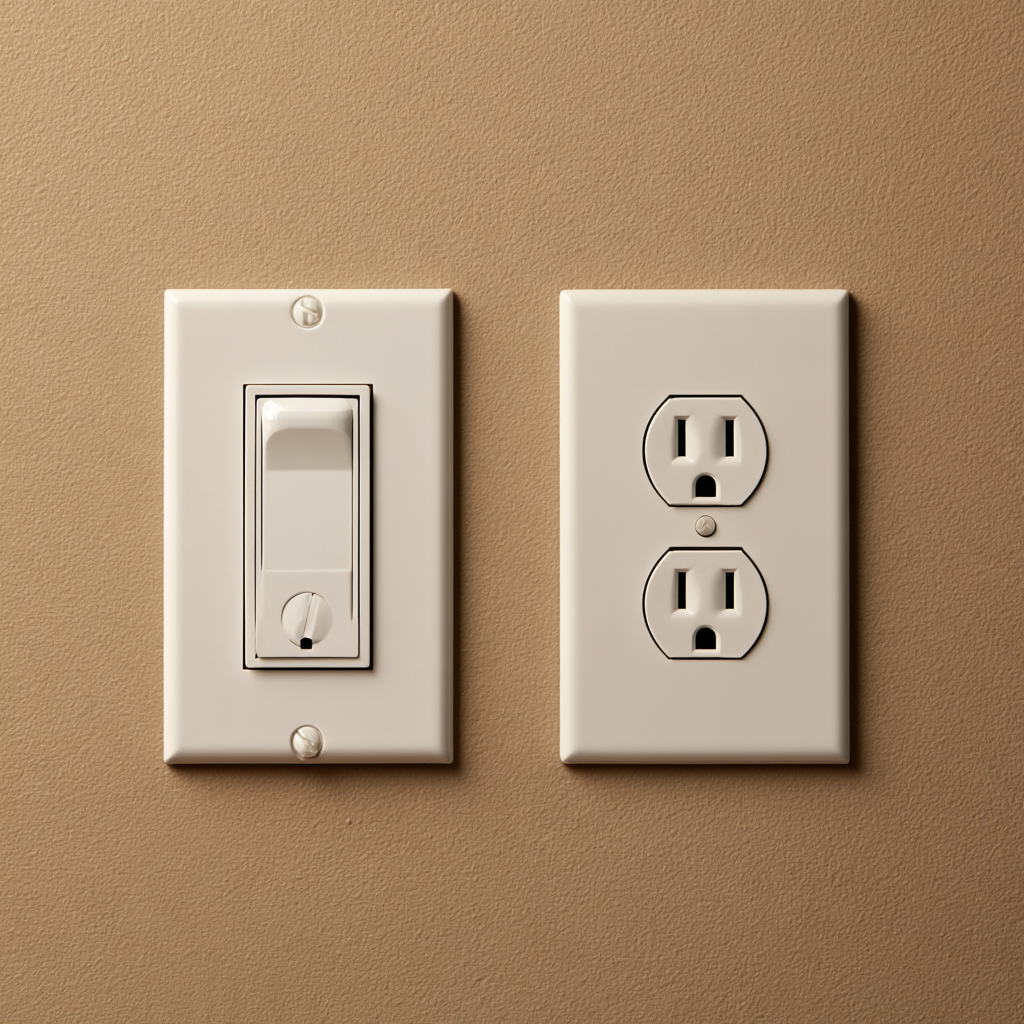
Use GFCI outlet switches where shock risk is highest, like bathrooms, kitchens, garages, basements, laundry areas, and outdoor locations, because they trip fast when current leaks to ground. Use AFCI protection on bedroom and living-area circuits to catch dangerous arcing from loose or damaged wiring before it starts a fire. Some circuits need both. If either device keeps tripping, unplug loads and call an electrician; the details below show how to test them properly.
What’s the Difference Between GFCI and AFCI?
GFCI and AFCI protect against different electrical hazards, so they are not interchangeable. You use GFCI to reduce shock risk: it monitors current imbalance to ground and trips fast when leakage suggests wet conditions or damaged insulation. You use AFCI to reduce fire risk: it detects arcing signatures from loose connections or compromised conductors before heat can ignite nearby materials. GFCI devices often include TEST and RESET buttons, making verification simple at the receptacle. AFCI protection usually sits at the panel in a breaker, including combination units that supervise branch circuits. Because each device targets a distinct failure mode, you need the right one for the hazard you’re managing. GFCI outlets typically cost about $15, while AFCI breakers often run about $35.
When Should You Choose GFCI Protection?
You should choose GFCI protection in locations with elevated shock risk, including bathrooms, kitchens, basements, garages, and outdoor or laundry areas. Moisture can create ground-fault conditions by giving electricity a path to ground through wet devices, damaged insulation, or even your body, so a GFCI trips quickly to reduce shock and burn risk. If a GFCI trips, treat it as a fault warning, unplug suspect equipment, check for moisture, and don’t keep resetting it if it trips again.
Shock Risk Areas
When moisture, damp surfaces, or water increase the chance that current could pass through a person, choose GFCI protection. You should prioritize it in shock risk areas where Ground faults can develop and expose you to unsafe leakage.
- Bathrooms and kitchens near countertops
- Garages, basements, and laundry areas
- Outdoor receptacles and exterior equipment points
- Any location with damaged cords or deteriorated wiring
GFCI devices monitor current imbalance and trip fast when leakage suggests a fault to metal parts or ground. If one trips, unplug suspect loads, inspect for moisture, then reset only after you’ve identified the cause. That disciplined response helps reduce shock, burns, and electrocution risk. In many jurisdictions, the NEC requires GFCI protection for these receptacles; verify local code before you install or replace anything.
Moisture And Ground Faults
Because moisture raises the chance of leakage current, choose GFCI protection in bathrooms, kitchen countertop circuits, garages, basements, laundry areas, and exterior receptacles. You’re guarding against a ground fault, where current escapes the normal hot/neutral path and travels through wet insulation, metal boxes, or even you. GFCI senses that imbalance and trips fast, using the TEST/RESET device or a breaker to cut power before shock escalates. If water exposure makes a GFCI outlet trip after a hair dryer, vacuum, or outdoor tool runs, treat it as a warning, not a nuisance. Don’t keep resetting it. Repeated trips after unloading the circuit point to damaged appliances, wet connections, or deteriorated wiring. In these locations, GFCI and AFCI aren’t interchangeable; moisture-driven hazards call for GFCI.
When Should You Choose AFCI Protection?
Choose AFCI protection when your goal is to reduce arc-fault fire risk, since AFCIs detect unintended arcing patterns that standard breakers may miss. Use an AFCI breaker on an arc fault circuit serving bedrooms or living spaces where loose, stressed, or overheated wiring can ignite nearby materials.
- Watch for frayed, aged, or damaged conductors.
- Protect circuits with pierced insulation from nails or staples.
- Address flickering, buzzing, or repeated sparking promptly.
- Test the AFCI monthly; replace it if it won’t trip.
You should also specify AFCI when you want a smarter defense against series or parallel arcs caused by melted insulation or stressed connections. That proactive layer improves safety without sacrificing modern electrical performance.
Which Rooms Usually Need GFCI Outlets?
After arc-fault protection, the next layer of home electrical safety is ground-fault protection, which helps reduce shock risk in wet or damp areas. You’ll usually need GFCI receptacles in bathrooms, especially near sinks and tubs, where moisture is constant. Kitchens also typically require GFCI-protected countertop outlets to handle spills and wet hands safely. In garages and exterior locations, weather and damp surfaces make GFCI essential. Basements and laundry areas often need it too, since leaks, humidity, and appliance wear can raise fault risk. In older homes, you may find only partial GFCI coverage, so don’t assume every vulnerable outlet is protected. A qualified electrician can verify which rooms and receptacles meet current code and help you upgrade with modern safety reliability.
Which Circuits Usually Need AFCI Protection?
You’ll usually need AFCI protection on branch circuits that serve bedrooms and other living areas, because the NEC targets these spaces for arc-fault fire prevention. AFCI devices detect arcing caused by loose connections, damaged insulation, or deteriorating cords, so they protect against fire risk rather than ground-fault shock. In many homes, you’ll use panel-side AFCI breakers, and some panels support dual-function breakers if the circuit also needs GFCI protection.
Bedrooms And Living Areas
In bedrooms and other living areas, AFCI protection is usually required on branch circuits that feed outlets and lighting because it helps detect dangerous arcing faults before they overheat wiring and start a fire. You’ll typically add AFCI protection at the electrical panel with an AFCI breaker, or a compatible combination AFCI/GFCI device when the circuit allows it. This matters because loose connections, damaged insulation, and pinched cords can create series or parallel arcs that a standard breaker may miss.
- Protect bedroom receptacle circuits
- Protect living room lighting runs
- Verify local code requirements before upgrading
- Match the device to the circuit type
When you modernize these circuits, you gain faster fault interruption and stronger fire safety without changing how you use the room.
Panel-Side AFCI Breakers
Panel-side AFCI breakers are typically required on branch circuits that feed bedrooms and general living areas, because they help interrupt dangerous arcing faults before they can overheat wiring and start a fire. You should look to the panel when code requires circuit-level protection, since a receptacle swap won’t always satisfy the rule. An AFCI breaker detects Electrical arcing caused by loose terminals, damaged insulation, or stressed conductors, then opens the circuit fast. If your panel supports dual-function devices, you may combine AFCI and GFCI protection on the same branch, but only if the design allows it. If an AFCI trips again after reset, don’t bypass it; inspect the wiring and connections on that circuit and correct the fault.
When Do You Need Both GFCI and AFCI?
When a circuit must protect against both shock and arc-fault fire hazards, you need both GFCI and AFCI protection. You’ll see this on bedroom or living-area branch circuits that also serve wet locations, where code demands AFCI,GFCI coverage. In those cases, a compatible combination device or dual-function breaker can satisfy both requirements efficiently.
- GFCI addresses ground-fault shock risk.
- AFCI detects dangerous arcing between conductors.
- Bathrooms, kitchens, basements, and garages often trigger GFCI.
- Repeated tripping means you should inspect wiring, moisture, or damaged cords.
You shouldn’t choose based on appearance; choose by circuit location, wiring layout, and the hazard code applies. AFCI is usually panel-based, while GFCI is often local, unless you use integrated protection.
What Does a Tripped GFCI or AFCI Mean?
A tripped GFCI means it detected an imbalance between hot and neutral current and shut off power to reduce shock risk, while a tripped AFCI means it sensed arcing that could overheat wiring and start a fire. With a GFCI, the fault is an unintended current path, often from moisture, damaged cords, or contact with grounded metal. With an AFCI, the issue usually points to stressed connections, frayed conductors, or insulation damage. If either device keeps tripping after you reset it, treat that as an active safety signal, not a nuisance. Stop repeated resets, unplug the circuit’s loads, and inspect the wiring or device before you restore service. In wet or high-use areas, GFCI trips often reveal real exposure, while AFCI trips flag hidden connection problems.
How Do You Test GFCI and AFCI Devices?
- For AFCI devices, use the manufacturer’s TEST method.
- Confirm the breaker or combo unit trips as designed.
- Unplug loads and inspect for moisture, damaged cords, or arc-prone wiring before resetting.
- Don’t repeatedly reset a device that trips again immediately.
If a GFCI or AFCI fails its test, it isn’t reliable for protection. Treat that result as a diagnostic signal, not a nuisance. Precision testing helps you keep an advanced electrical system safe, responsive, and code-compliant.
When Should You Call an Electrician?
If a GFCI or AFCI fails its test or keeps tripping after you reset it, don’t ignore it—those devices are warning you about an active ground fault, arcing condition, or wiring problem that needs professional attention. Call an electrician if the trip repeats, if you can’t find a TEST/RESET device, or if the fault isn’t tied to one outlet. You may have protection at the panel or multiple devices on the circuit. If a GFCI trips when you plug in equipment in a kitchen, bath, garage, basement, or outdoors, suspect moisture or damaged cords. Also call for loose outlets, frayed wiring, heat damage, or a suspect breaker. AFCI protection detects dangerous arc patterns standard breakers may miss, and outdated or noncompliant devices need code-aware upgrades.
Frequently Asked Questions
What Is the Average Cost to Replace a GFCI Outlet?
The average cost to replace a GFCI outlet is about $15 for the device, and that lucky coincidence can keep your upgrade affordable. You’ll usually pay more for labor, so Common replacement pricing often lands around $75 to $200. DIY vs professional costs differ because electricians isolate power, verify wiring, and test TEST/RESET operation. If you’ve got damaged insulation or a panel-based issue, your total can rise.
Do Exterior Receptacles Need to Be AFCI Protected?
No, exterior receptacles usually don’t need AFCI protection; you’ll typically need GFCI instead under Outdoor outlet code rules. You should verify local AFCI requirements, since amendments and circuit type can change the answer. If you’re replacing a device, replacement cost varies by breaker, combo unit, and labor. Use an inspection checklist: moisture, damage, wiring integrity, and nuisance trips. For innovative safety, ask a licensed electrician to confirm compliance and protection.
What Is the Difference Between a GFCI Outlet and a GFCI Circuit Breaker?
A GFCI outlet protects the receptacle it’s on, plus any downstream outlets wired through its load terminals; a GFCI circuit breaker protects the whole circuit from the panel. You’ll see TEST and RESET buttons on the outlet. Think of it like one sensor versus a whole-network monitor: after a 2023 study, 100% faster shutdown mattered. GFCI Protection cuts shock risk; vs AFCI Protection, it targets leakage, not arcing.
How to Tell if You Have an AFCI Breaker?
You can tell you’ve got an AFCI breaker by checking your main electrical panel for handles or labels marked “AFCI,” “Arc-Fault,” or “Dual Function.” To identify AFCI panels, inspect the breaker faceplate and the circuit directory. That’s where to find AFCI labeling. An AFCI breaker usually trips like a standard breaker and won’t have TEST/RESET buttons on the outlet, which signals protection is happening at the panel.
Conclusion
In the end, you choose GFCI where water lurks and AFCI where hidden heat can smolder. You’re not just picking outlets—you’re building a safety net that catches different kinds of electrical danger before they spread. If a device trips, treat it like a smoke signal, not an annoyance. Test both regularly, replace worn components promptly, and call a licensed electrician when you’re unsure. Smart protection keeps your home’s wiring steady, clear, and safe.


